
Fashion History
From the workshop to the global supply chain: how the design, the product and the way of making have changed.
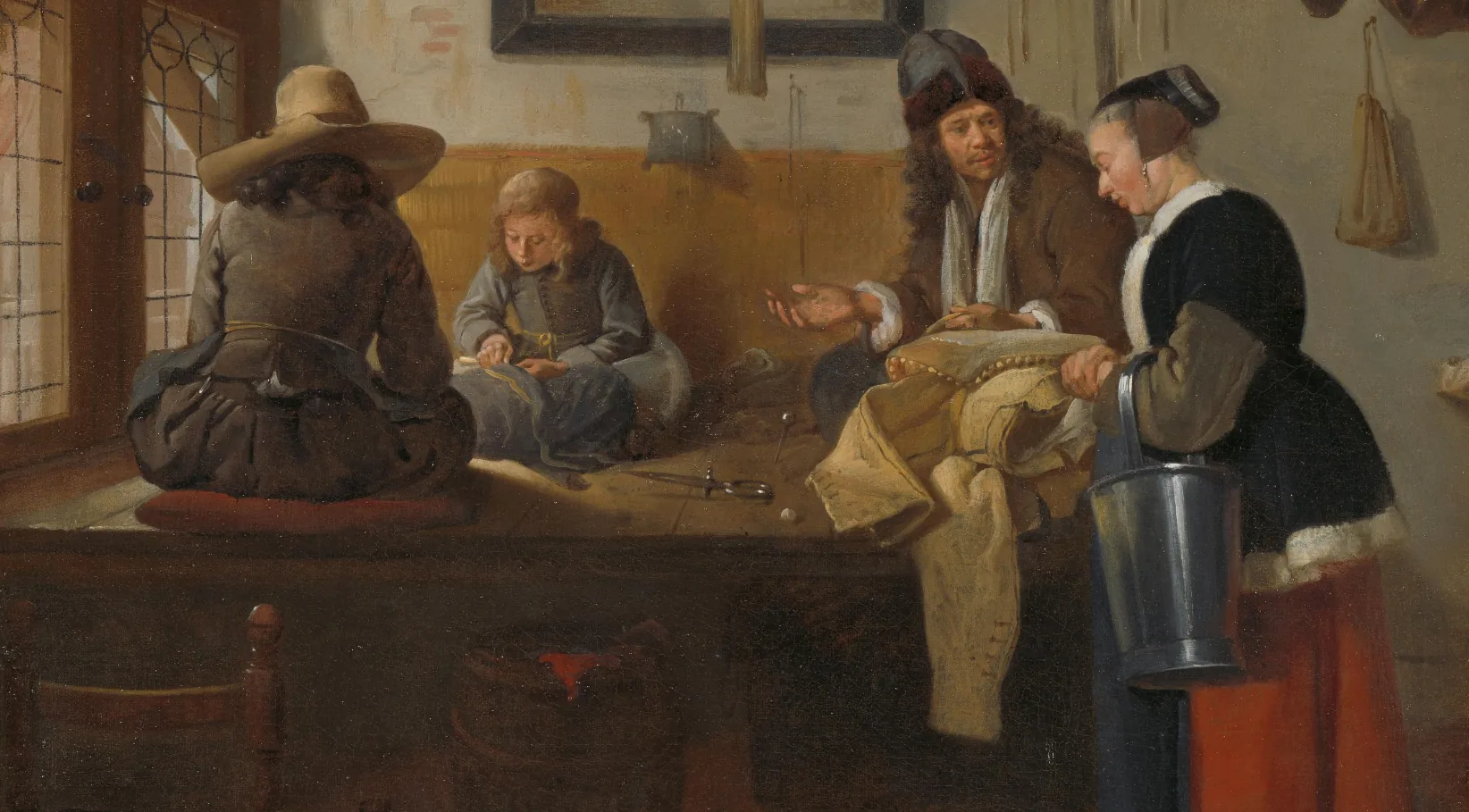
The history of fashion is also the history of how a garment is designed, built and distributed.
Workshops, guilds and made-to-measure tailoring
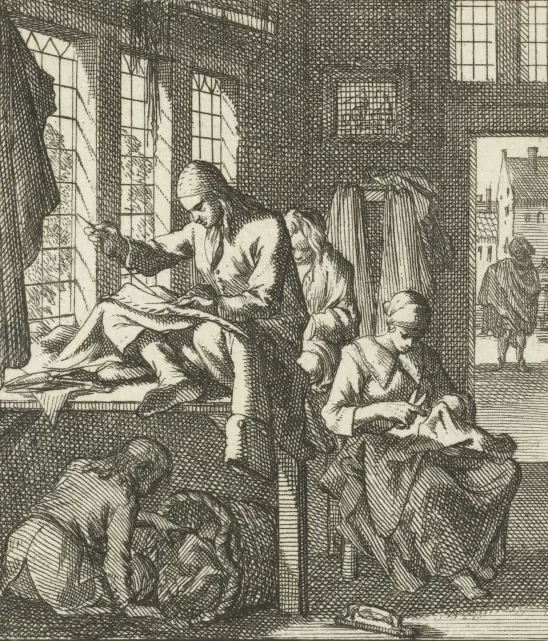
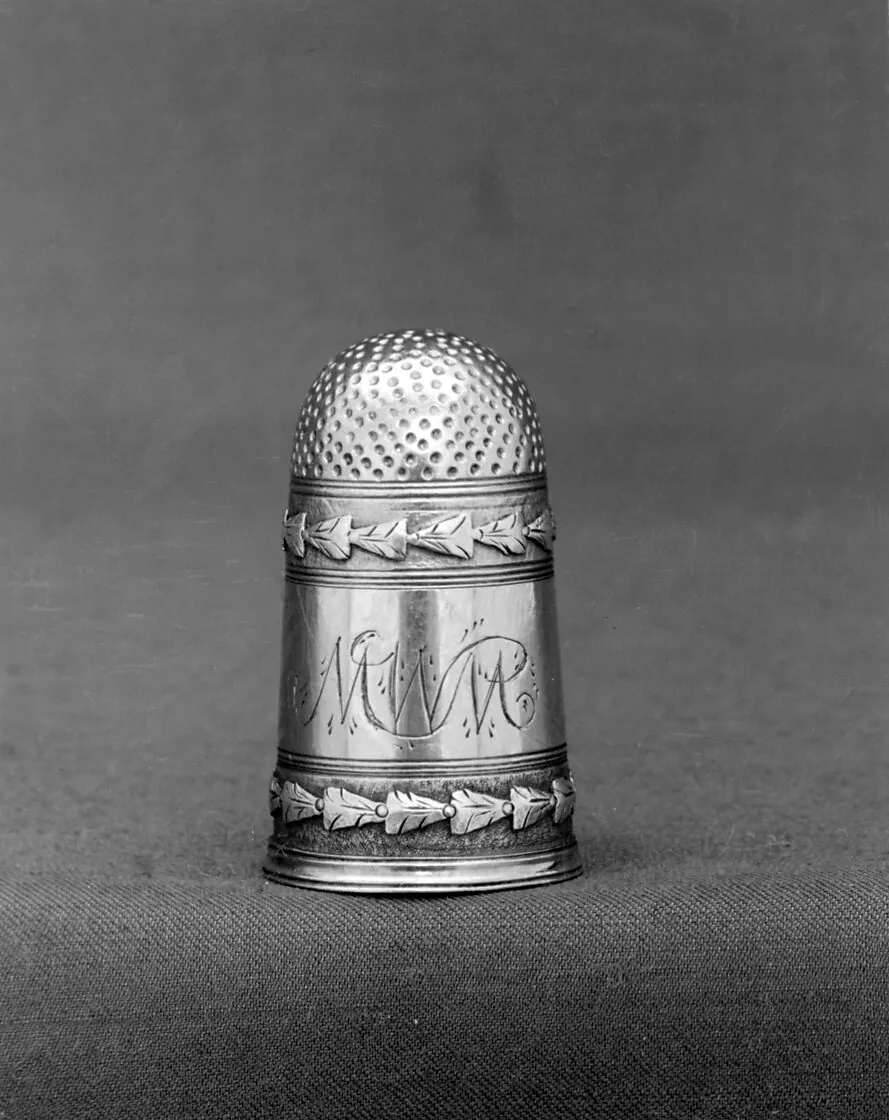
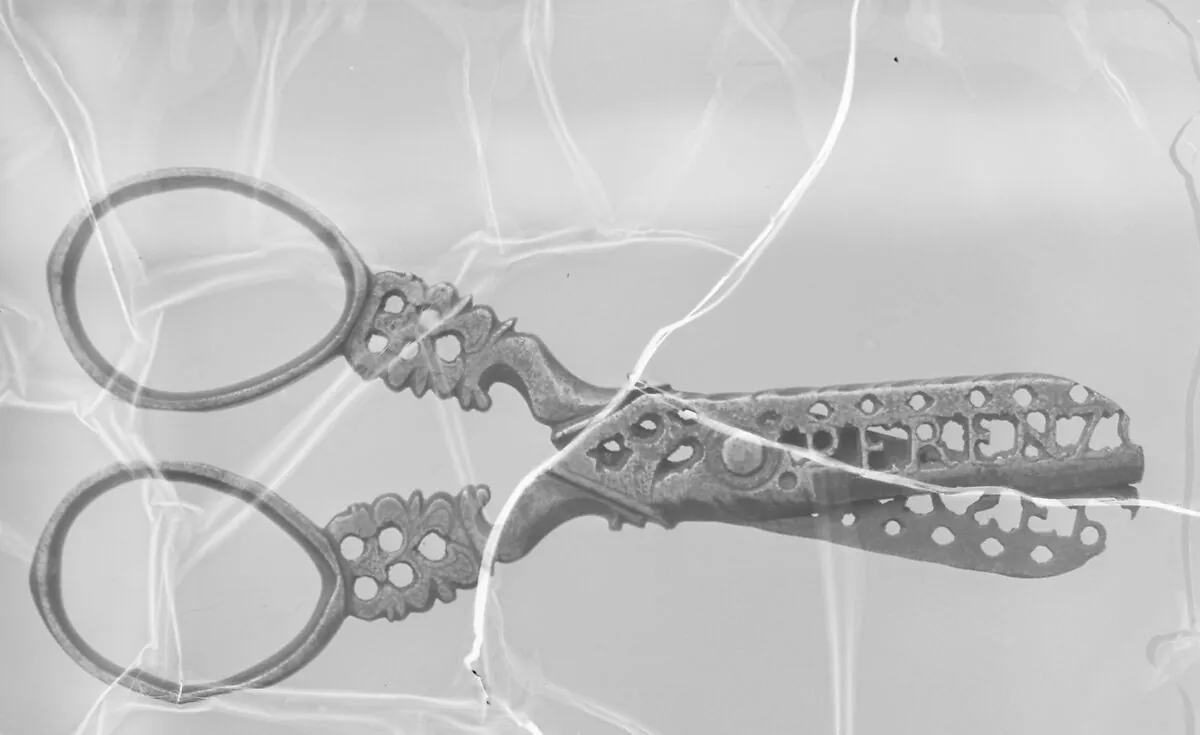
For centuries a garment was the result of a direct relationship between the person who ordered it and the person who made it. Fashion did not work in seasonal collections. Change was slow, tied to what people could afford, to fabrics, to local techniques and to social hierarchies.
In Europe, between the Middle Ages and the early modern period, clothing production was organized around specialized trades. Guilds regulated access to the professions, the training of apprentices, the quality of the work and, in many cases, the conditions under which a business could operate. Rules varied from city to city: there was no single European model.
The tailor, the cutter, the weaver, the embroiderer and the cloth merchant each had different skills. Building a garment took a network of relationships, not necessarily concentrated in a single workshop.
A documented case is London's Merchant Taylors' Company: historical research shows that women took part in the guild's activities and apprenticeship paths far more than the traditional history of tailoring would suggest.
- Who changes the system
- There is no single inventor or designer to point to. The change is organizational: guilds and workshops establish a division of labor based on specialization.
- What changes technically
- The garment comes from individual measuring, hand cutting, assembly and repeated fittings on the body. Fit depends on the ability to read the measurements and correct the pattern during the work.
- Mistakes and limits
- Made-to-measure takes time and skills that are hard to transfer. Quality depends on the individual workshop and on the availability of experienced staff. Access to the trades is shaped by guild rules and social hierarchies.
- What remains today
- The relationship between measurements, fit, construction and quality. Even an industrial garment comes from decisions about geometry, proportion, materials and how it behaves on the body.
The alchemist of the workshop
Next to the tailors and the guilds there was another kind of workshop, where people worked on matter itself: dyes, metals, glass, and the fire that changes them. In Greco-Roman Egypt this knowledge was written down as recipes. Two papyri found at Thebes, now in Leiden and Stockholm, collect more than two hundred of them: purple dyeing of wool, coloring of stones, imitation of gold and silver.
Zosimos of Panopolis, an Egyptian alchemist of about 300 AD, left writings that include similar recipes alongside a way of thinking about transformation. The alchemist of the workshop, in this sense, is not a wizard. He is someone who knows a material, its limits and the conditions under which it changes.
The same thread reaches Italy. In 1612 Antonio Neri, a Florentine priest and alchemist, published L'Arte Vetraria, the first general treatise on glassmaking, in which secrets guarded by the Venetian glassmakers became printed pages. Making knowledge repeatable by someone else is exactly what a technical file does today.
- What is documented
- The Leiden and Stockholm papyri, the writings attributed to Zosimos and Neri's printed treatise exist and can be read.
- Legend and interpretation
- Making gold and the philosopher's stone belong to the legend. In the practical texts, much of the work concerns changing the color of materials and imitating precious metals.
- What remains today
- The idea that a transformation can be described, repeated and handed on: from the guarded recipe to the documented process.
Charles Frederick Worth and the birth of the collection system
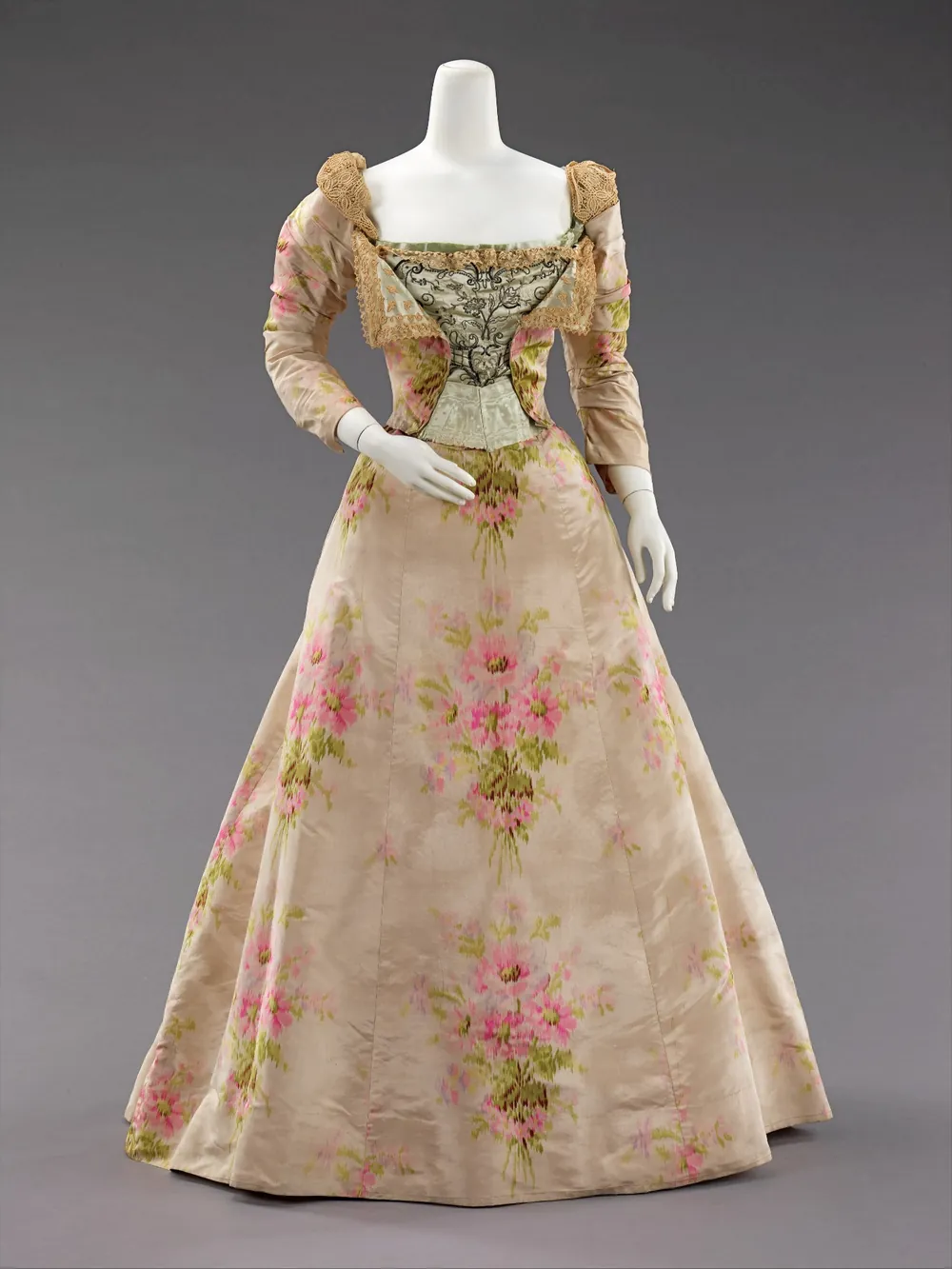
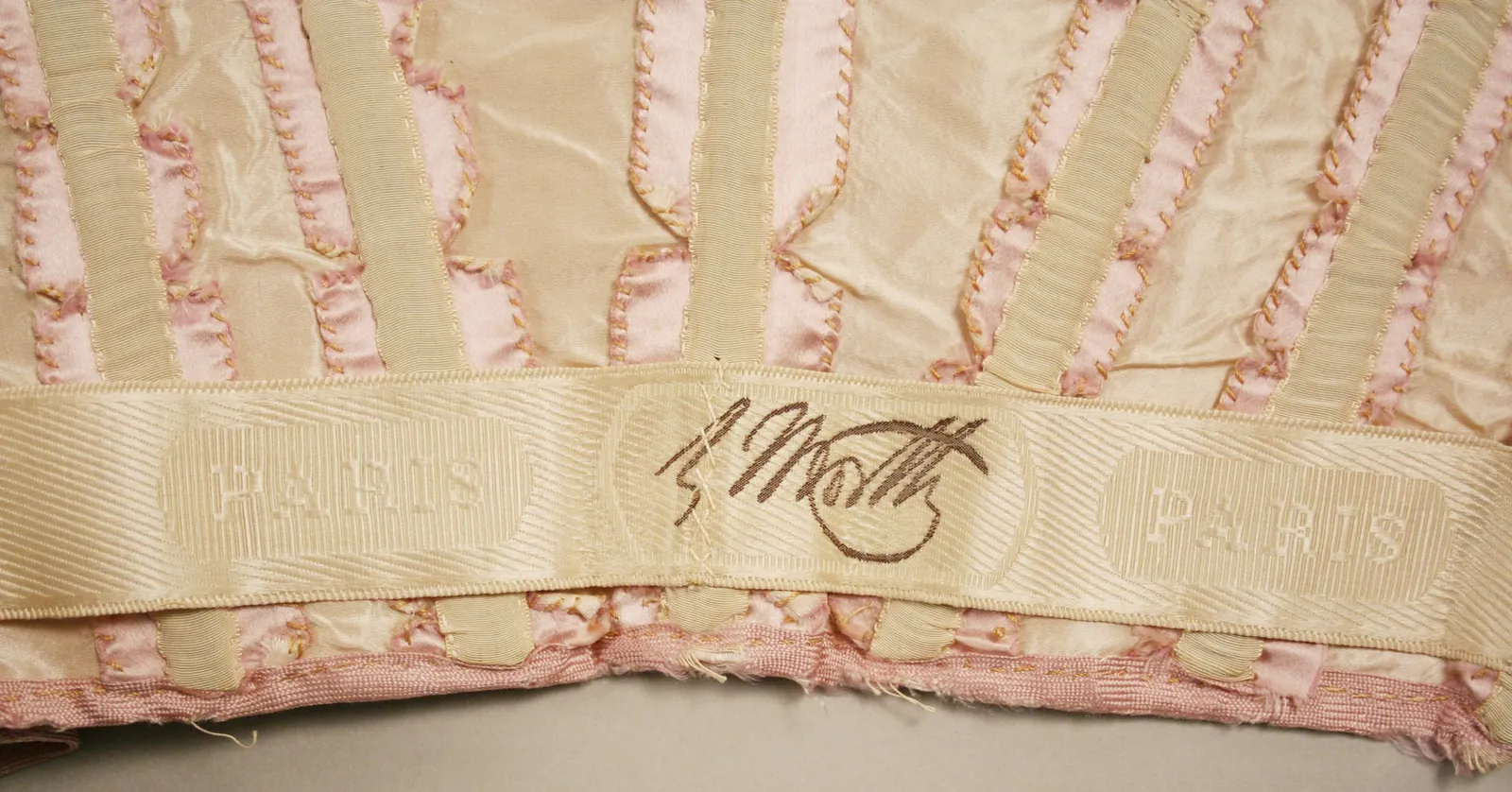
The shift from tailoring to modern fashion happens when the tailor starts proposing his own designs, instead of just carrying out the client's requests.
The central figure is Charles Frederick Worth. In 1858 he opens a maison at 7 rue de la Paix in Paris, together with Otto Gustave Bobergh. The designs are created by the house, shown to clients and then made to order.
The novelty is not only a recognizable style: it changes the relationship between design and sales. Worth helps shape the seasonal collection system, with designs conceived for different times of the year. Clients look at the proposals, choose and commission. The garment is still mostly made to measure, but creative direction moves toward the house.
He cannot be credited alone with inventing the modern fashion show: presentations of clothes and models already existed. It is more accurate to recognize his decisive role in turning the presentation of collections into a commercial and identity tool for couture.
- Who changes the system
- Worth, with his partner Bobergh, introduces an entrepreneurial model in which design, the creator's reputation, presentation and in-house production are tightly connected.
- What changes technically
- More structured organizations emerge: ateliers, workrooms, reference models, organized fittings and a seasonal schedule.
- Mistakes and limits
- The system depends on a very small clientele. Success concentrates on the founder's reputation, while the collective work of the atelier stays largely invisible. Unauthorized copying of designs becomes a serious problem, as Madeleine Vionnet would later show in defending her creations.
- What remains today
- The collection as a unit of design, the seasonal calendar, the house's stylistic identity and the distinction between creative development and the making of each garment.
Machines, industrial clothing manufacture and the birth of ready-to-wear
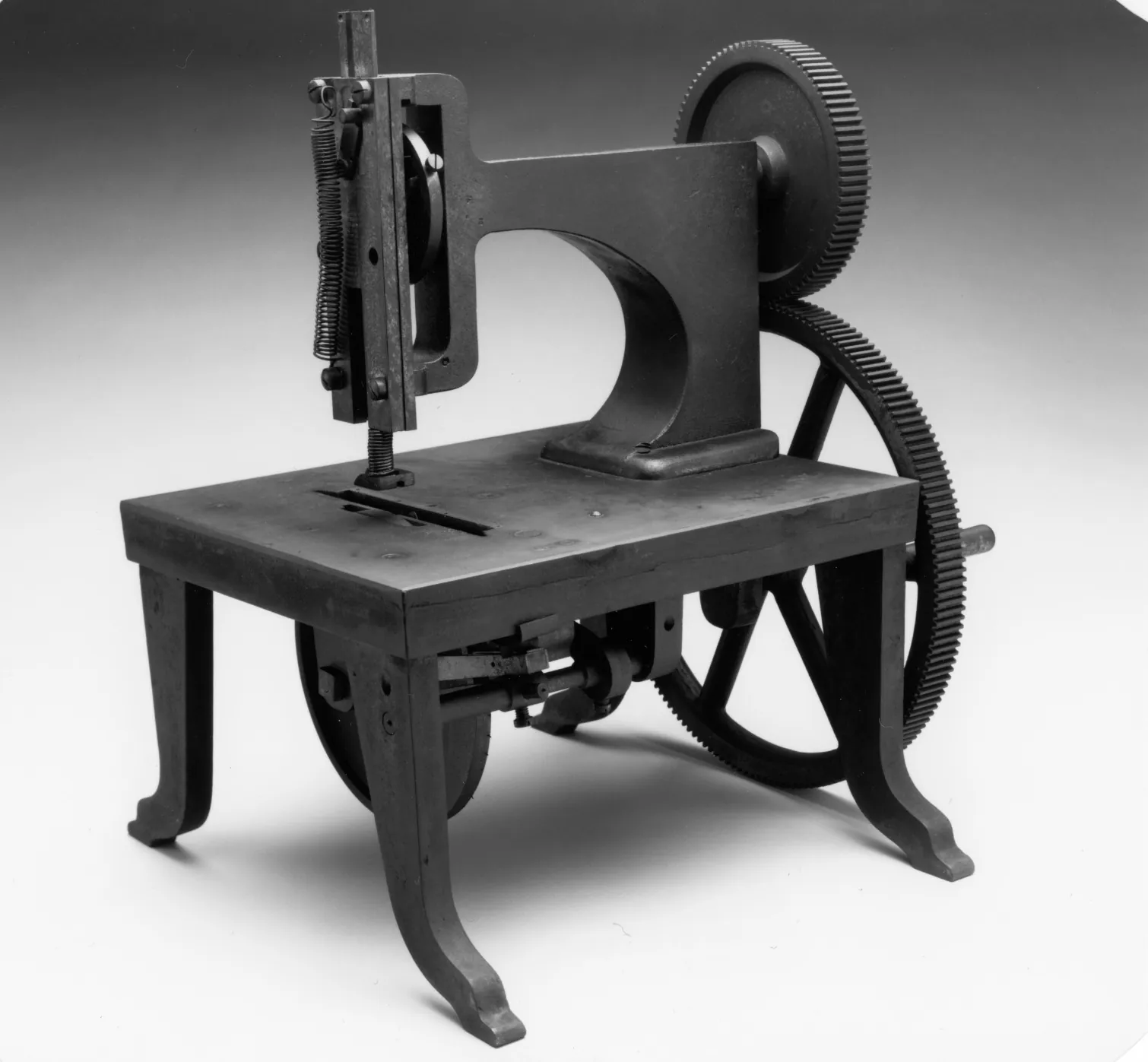
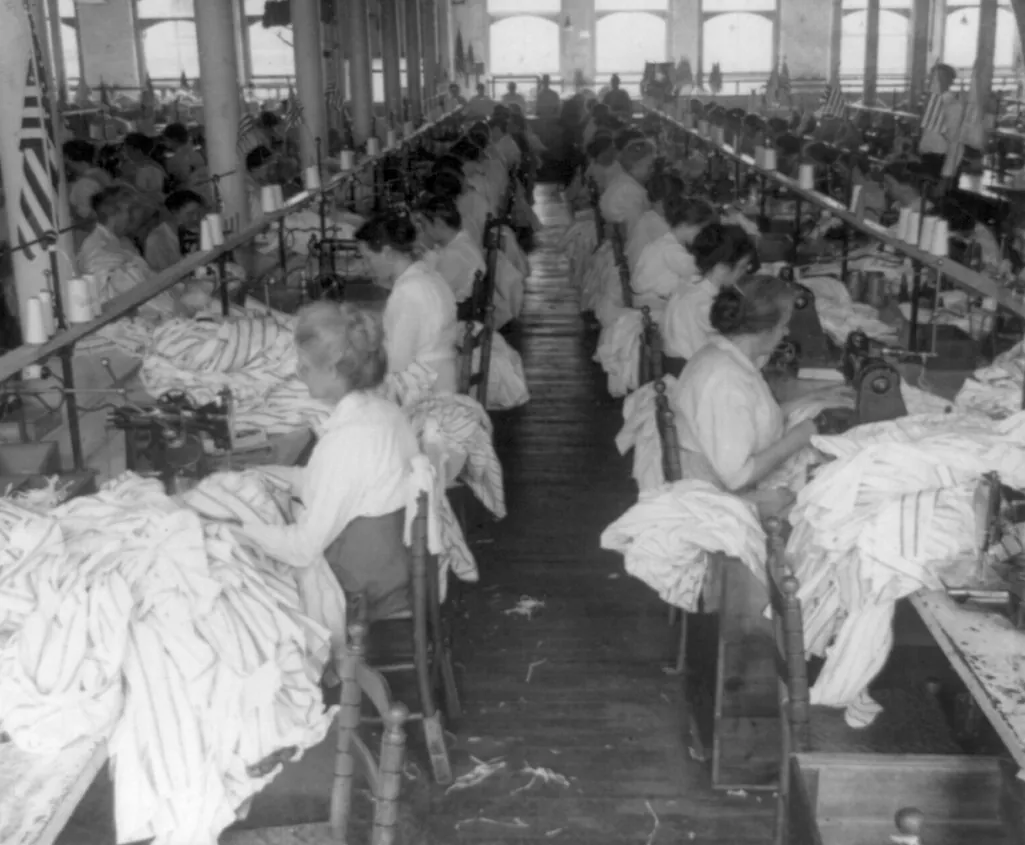
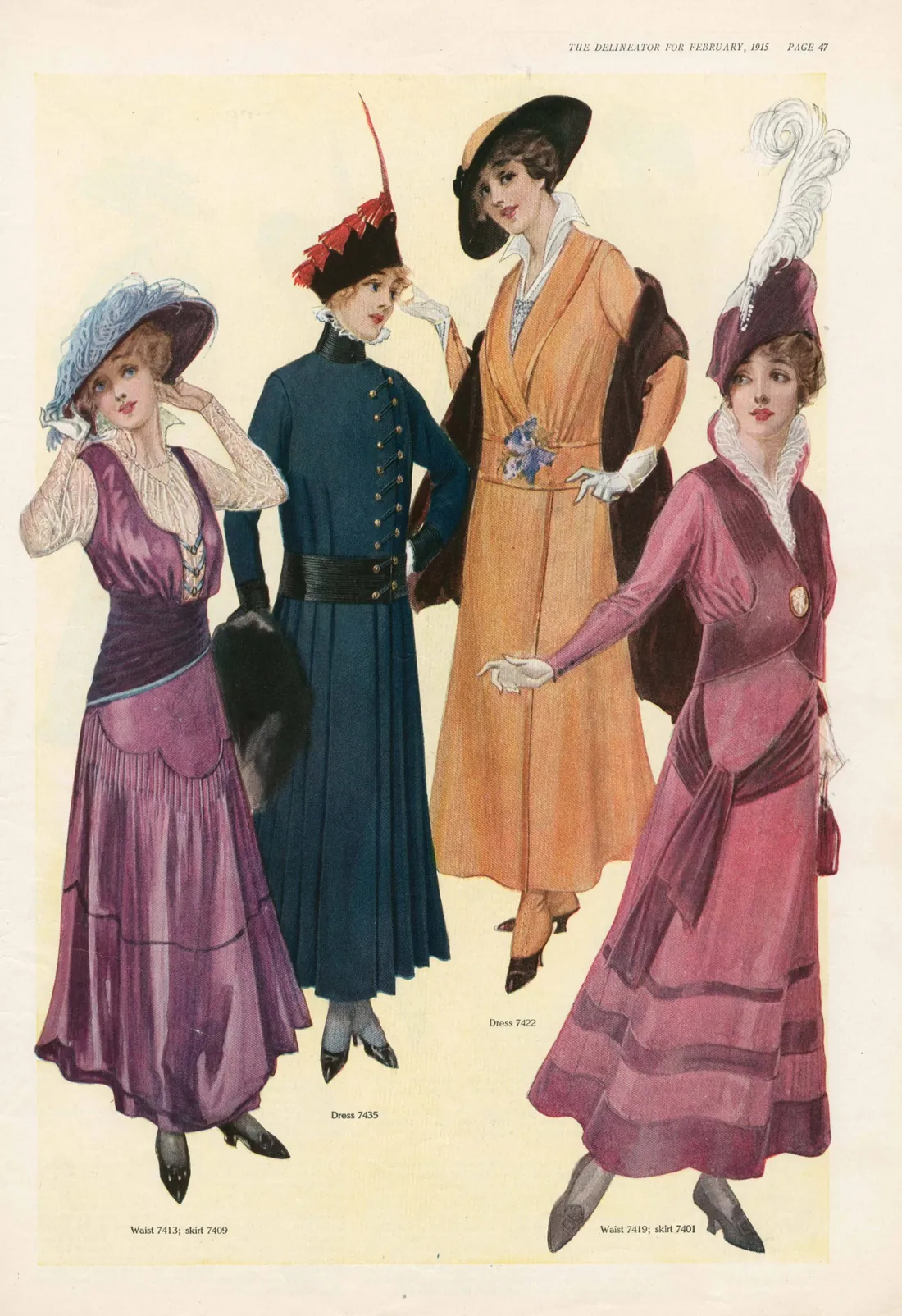
The industrial transformation of fashion does not begin with one brand or one invention. It comes from the meeting of textile mechanization, sewing machines, standardized sizing, commercial distribution and the organization of labor.
On September 10, 1846 Elias Howe is granted U.S. patent no. 4,750 for a sewing machine based on the lockstitch. The design has operating limits, but it is a decisive step in the mechanization of sewing.
In 1851 Isaac Merritt Singer patents his own configuration. He does not invent the sewing machine alone: he improves a technology that already existed and helps spread it commercially.
The difference in production is enormous. Some operations can be done faster and more repeatably, and production organizes itself into specialized tasks, dedicated machines and departments.
In the same period, commercial paper patterns, catalogs and department stores develop. Designs can be reproduced and distributed without starting again from individual design each time.
In the United States, ready-made menswear comes before womenswear, which meets more difficulty because of the complexity of fit. Between the late nineteenth century and the first decades of the twentieth, women's ready-to-wear gradually extends to blouses, coats, suits and dresses.
- Who changes the system
- Howe and Singer mark two fundamental steps in mechanization. The change also involves entrepreneurs, pattern makers and distributors.
- What changes technically
- The sewing machine, the division of operations, repeatable components and standardized sizes make it possible to produce more similar garments.
- Mistakes and limits
- Higher productivity does not mean better working conditions. On March 25, 1911, the fire at the Triangle Shirtwaist factory in New York kills 146 people, mostly young women workers. The event exposes the risks of workplaces with blocked exits and without adequate safety measures.
- What remains today
- The separation of operations, assembly sequences, standardization, quality control and the relationship between working time and industrial cost. They still underpin a bill of materials and production planning.
Design becomes the study of form
Industrialization does not end research into how a garment is built. Some designers push tailoring technique toward a more sophisticated understanding of form.
A key figure is Madeleine Vionnet. After working at other houses, she opens her own in Paris in 1912.
Her best-known contribution is the bias cut: cutting the fabric diagonally to the warp and weft threads. The fabric adapts better to the body and creates movement. It is not only an aesthetic choice: it changes how material is used, how the pattern is set up and how the garment is built.
Vionnet works through geometric studies and three-dimensional models, turning the relationship between fabric, gravity and body into a design process. Her commitment to protecting her designs and the people employed at the house is also significant, with initiatives such as paid holidays and in-house services.
- Who changes the system
- Madeleine Vionnet shows that fashion design can start from the structure of the fabric and not only from the outer drawing.
- What changes technically
- Bias cut, draping, geometry and pattern development become tools of design research.
- Mistakes and limits
- Successful designs get copied and protecting a design stays hard. Economic crisis and wars interrupt the activity of many houses.
- What remains today
- Studying the fabric before building the garment, the relationship between patternmaking and material behavior, and the need to protect design work.
Postwar Italy and the making of Made in Italy
After the Second World War, Italian fashion begins to build an international identity. The tailoring and manufacturing heritage already exists, but a system is needed to present it to foreign buyers.
The decisive step comes on February 12, 1951, when Giovanni Battista Giorgini organizes a collective presentation of Italian high fashion in his own residence in Florence. The initiative is aimed at international buyers and, in particular, at the American market.
Names such as Sorelle Fontana, Emilio Schuberth, Jole Veneziani and Emilio Pucci take part. It is not yet the Milanese prêt-à-porter system: it is a commercial platform that connects creativity, manufacturing and distribution.
The presentations later move to the Sala Bianca of Palazzo Pitti, and Florence becomes a reference point for postwar Italian fashion.
In the following years an articulated production geography develops: Rome keeps a strong presence in high fashion, Florence in international promotion, and Milan takes a central role in the relationship between industry, design, publishing and commerce.
A symbolic step comes in 1972, when Walter Albini chooses Milan to present his line. In those years a new professional figure takes shape: the designer who works with the textile industry to develop garments for serial production.
- Who changes the system
- Giorgini organizes access to foreign markets. Albini helps drive the shift toward design tied directly to industrial production.
- What changes technically
- The collection is conceived in relation to available fabrics, production capacity, sizes, quantities, timing and distribution.
- Mistakes and limits
- The transition is not free of conflict. The Italian system has to find a balance between high fashion, industrial production, exports and new commercial needs, and cities compete to define their own position.
- What remains today
- The relationship between creativity and production districts, the value of territorial specialization and the coordination between designer, textile industry and garment manufacturing.
Prêt-à-porter, the industrialization of design and the Milanese system
In 1966 Yves Saint Laurent opens the Rive Gauche boutique in Paris. A couturier presents an autonomous prêt-à-porter line, designed with the same care given to couture but meant for different production and distribution.
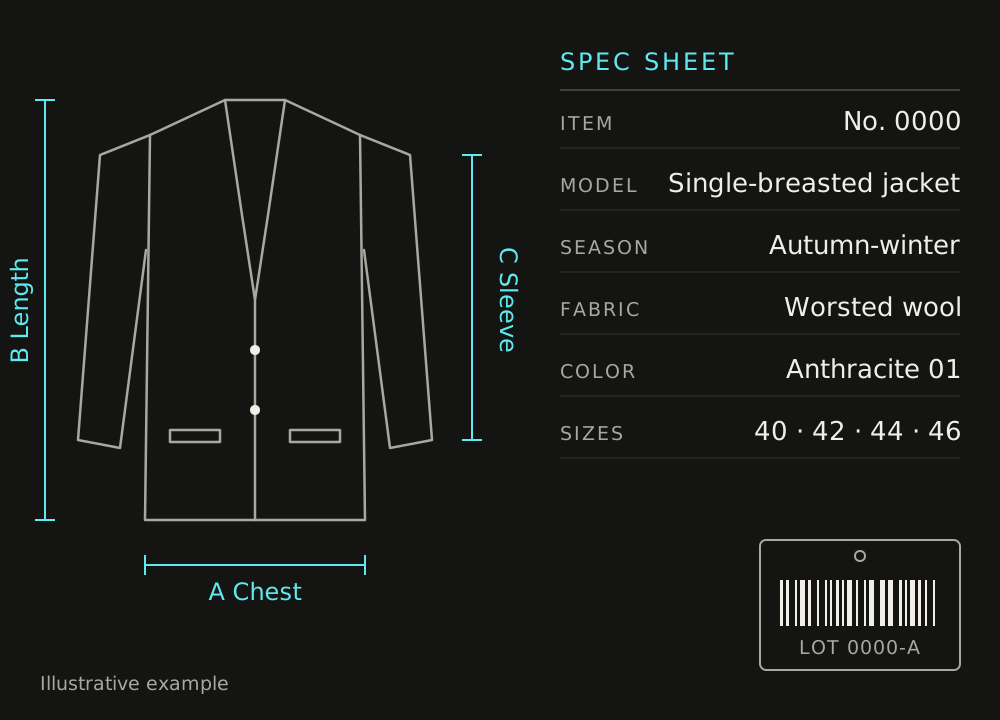
Prêt-à-porter is not haute couture made with cheaper materials. It is a system in which the product has to work through sizes, quantities, material availability, repeatable processes and a wider commercial network.
In Italy this transformation finds favorable ground. The closeness of the textile industry, garment manufacturing, accessories, patternmaking and design makes it possible to develop collections with a direct link between conception and production.
Milan becomes the center of the system. Its position relative to the industrial districts and the presence of design, communication and distribution professionals favor a new model.
At the end of the 1970s the Milanese calendar organizes itself into separate events, devoted to the commercial, industrial and creative sides. The new identity of Milanese fashion also comes from this articulation.
- Who changes the system
- Yves Saint Laurent redefines the relationship between couture and ready production. Walter Albini represents the Italian shift toward industrial design with a stylistic identity.
- What changes technically
- The drawing has to become a replicable product. Patternmaking translates form into sizes, the bill of materials identifies materials and components, costing ties the design to economic constraints.
- Mistakes and limits
- The growth of collections and distribution raises the risk of misalignment between design, purchasing and production. An aesthetically successful design can be hard to industrialize or economically unsustainable.
- What remains today
- Product development as the link between creativity and manufacturing. The collection is no longer just a set of designs: it is an industrial and commercial program.
Global production and an accelerating market
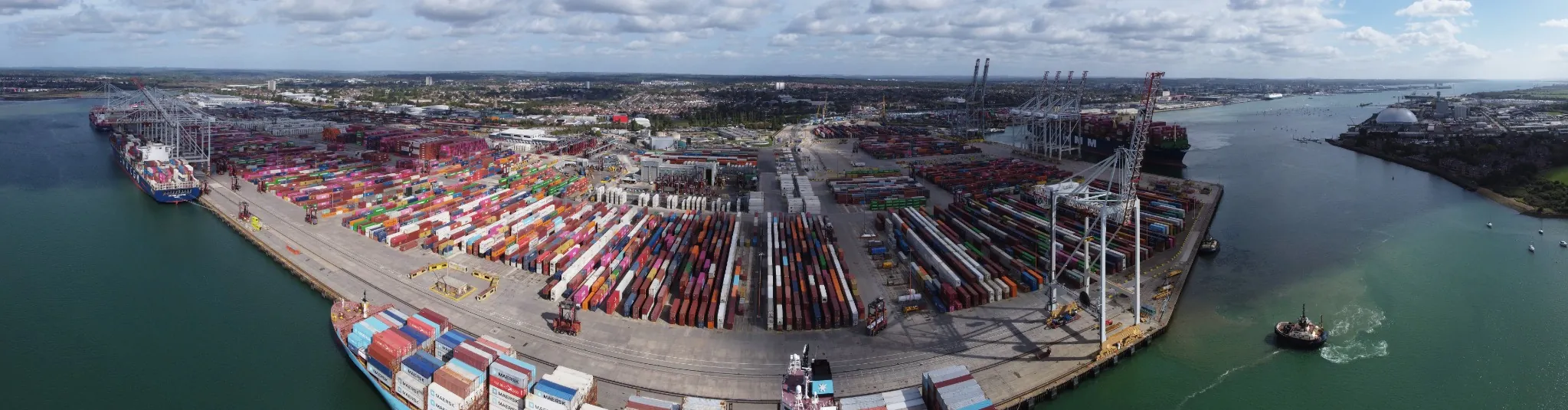
In the last decades of the twentieth century the supply chain extends beyond national borders. Companies can design in one country, buy fabrics in another, manufacture in a third and distribute internationally.
Between 1970 and 1992 a significant share of textile, clothing and footwear production moves from Europe and North America to Asia and other developing economies. It is not a simple transfer of factories: employment, the weight of informal work and the distribution of skills change as well.
Above all, the organizational model changes. The need grows to coordinate suppliers, subcontractors, transport, quality, delivery times and costs.
Fast fashion develops in this context, but it has no single inventor and no agreed birth date. It is a commercial and production model with very frequent refreshing of the offer, short lead times and a quick response to market signals.
Studies of global sourcing show that competitive advantage also depends on suppliers' ability to offer skills, flexibility and speed, not only on the cost of labor.
- Who changes the system
- No individual figure emerges: it is the international networks of producers, suppliers and distributors that transform the supply chain.
- What changes technically
- Centralized planning, digital communication, international orders, distributed quality control and delivery management become essential functions.
- Mistakes and limits
- Pressure on prices and timing can reduce visibility into suppliers' working conditions and safety. The risk is a supply chain that is very efficient commercially but fragile socially and operationally.
- What remains today
- The need to know the real supply chain, assess suppliers, define responsibilities and verify timing, costs and quality beyond the first tier of production.
Crisis, sustainability and digital transformation
Globalization widened the possibilities of production, but it made the consequences of a supply chain built only on pressure for price and speed more visible.
On April 24, 2013 the collapse of the Rana Plaza building in Bangladesh kills 1,134 people and injures hundreds. The building housed five garment factories. The tragedy puts the responsibility of companies, the safety of factories and working conditions at the center of international debate.
It is not an isolated problem. It is a sign of a distance between those who sell a product and those who really check the conditions in which it is made.
Sustainability thus enters design as a technical and organizational question. Materials, composition, durability, repairability, traceability and end of life have to be considered from the first decisions.
On March 30, 2022 the European Commission adopts its strategy for sustainable and circular textiles, which focuses on durability, circularity, competitiveness and innovation and points to the still small share of recycled textile material that ends up in new textile products.
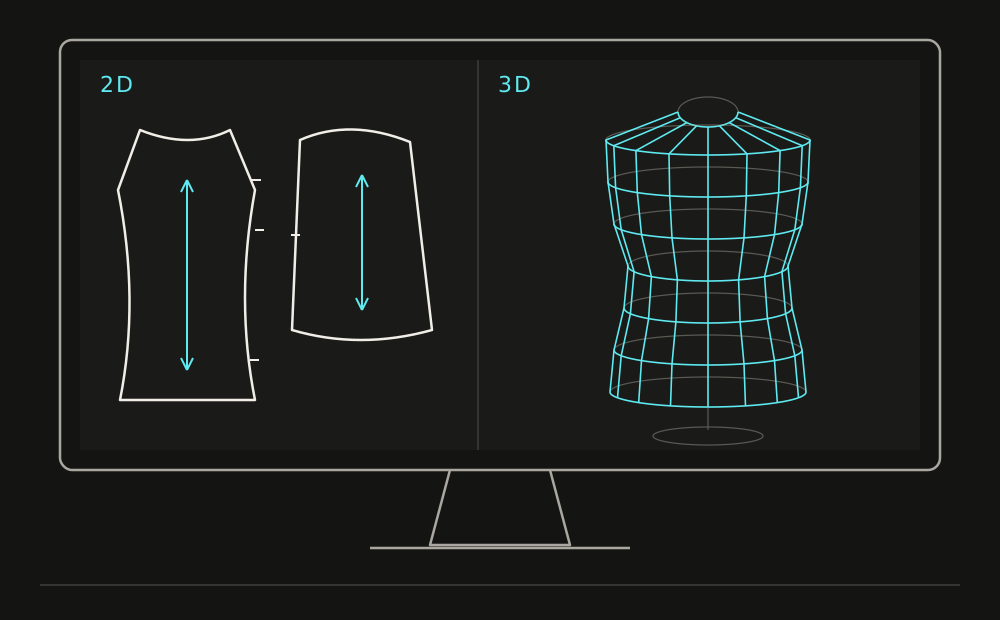
Meanwhile the design process changes as well. CAD systems make it possible to develop patterns and technical documentation in a digital environment, and patternmaking can be checked and modified before the physical prototype. Three-dimensional simulations make it possible to explore volumes, materials and fit, without removing the need for real trials when the behavior of the fabric requires them.
Digital fashion, moreover, is not only the digitalization of designing a physical garment. It also includes clothes made for virtual environments, avatars, augmented reality and digital identities.
- Who changes the system
- There is no single protagonist. International organizations, institutions, researchers, technicians, manufacturers and designers are redefining priorities together.
- What changes technically
- CAD, 3D simulation, digital prototyping, shared technical archives, traceability and material analysis tools increasingly enter the process.
- Mistakes and limits
- Digitalizing an inefficient process does not make it sustainable. An unchecked simulation can produce fit errors; a certification is not the same as full traceability; a material called recycled does not by itself guarantee a circular product.
- What remains today
- The need to link early decisions to their production consequences. Technology is useful when it reduces errors, makes information verifiable and improves decisions.

- 1846Elias Howe's patent: a key step in the mechanization of sewing.
- 1851Isaac Singer's patent: improvement and commercial spread of the sewing machine.
- 1858Worth opens his house in Paris: the haute couture system takes hold.
- 1911Triangle Shirtwaist fire: workplace safety enters the industrial debate.
- 1912The Vionnet house opens: research on construction and cutting.
- 1951Giorgini presents Italian high fashion to international buyers.
- 1966Saint Laurent Rive Gauche: prêt-à-porter becomes an autonomous project of the couturier.
- 1972Walter Albini chooses Milan: a new relationship between creativity, industry and city.
- 1970–1992Geographic reorganization of textile and clothing production.
- 2013Rana Plaza collapse: supply chain safety becomes a global issue.
- 2022European strategy for sustainable and circular textiles.
The women behind the product: skills often forgotten
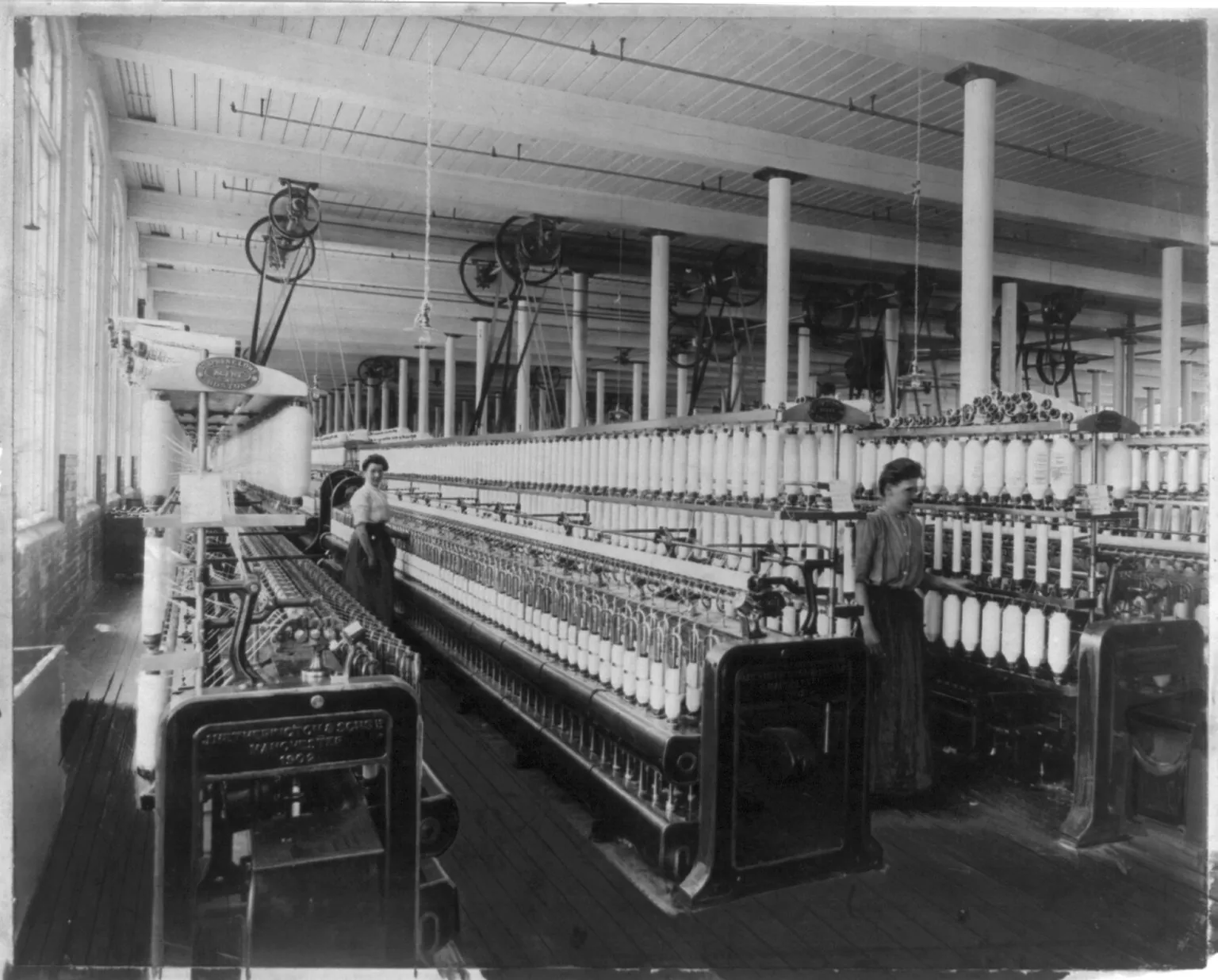
The history of fashion has often been told through the names of couturiers and designers. But a garment is never the work of one person alone. Behind the design there are decisive skills that have rarely received the same public recognition.
Madeleine Vionnet matters because she turned knowledge of fabric and cutting into a design system. Her work shows that technique does not come after the idea: it is part of it.
Women's participation in production was, however, far wider. Seamstresses, embroiderers, textile workers and garment workers were an essential part of the industrial supply chain.
A documented example is Bessie Rogarshevsky, a Russian-Jewish immigrant who in 1910, at sixteen, worked as a sewing machine operator in New York's clothing industry. Her story lets us see the relationship between immigration, women's work and the development of mass production.
The story of the Triangle Shirtwaist Factory shows that these workers were not only labor: they were people exposed to working conditions that helped trigger major union demands and safety reforms. Frances Perkins, who took part in the investigations after the fire and later became U.S. Secretary of Labor, is a key figure in the link between working conditions and institutional change.
In postwar Italy, the Sorelle Fontana and Jole Veneziani show that women were present not only in the execution departments but also in the creative and entrepreneurial leadership of the houses. Their participation in Giorgini's 1951 presentation is documented in the historical archives of Italian fashion.
Today, patternmakers, prototype makers, product technicians, quality managers and skilled workers keep translating design decisions into real objects.
It is not always possible to recover their names: many workers appear in the archives only as part of a department or a factory. It is a documentary limit that should be stated, not filled by inventing attributions.
The history of fashion is not the history of designers. It is also the history of the skills that make a product possible.
What it means for those who design today
Every major aesthetic change has come with a change in the way of working.
Couture introduced the collection as a tool for design and commercial organization. The sewing machine changed timing and the division of operations. Prêt-à-porter made it necessary to design for sizes and quantities. The Italian system showed the value of closeness between creativity and manufacturing. Globalization made coordinating the supply chain indispensable. Digitalization is changing how a product is developed, documented and verified.
For anyone developing a collection today, five practical points follow.
- The design has to understand the construction.A drawing is not yet a product. Materials, patternmaking, components and processes need to be considered during development, not only when the sample is made.
- Documentation is part of the product.The tech pack, bill of materials and costing turn the idea into verifiable instructions. If the information is not consistent, errors pass from one stage to the next.
- The supply chain has to enter the creative process.Material availability, supplier capacity, lead times and minimums shape what can actually be made. Knowing them in advance lets you design better.
- Speed and quality are not synonyms.Fast production creates rework, waste and fit problems if the design hasn't been verified. Cutting errors upstream does more than speeding up later stages.
- Technology has to improve decisions.Digital modeling, simulation and traceability tools are worth having when they let you verify what would otherwise stay uncertain or expensive to fix.
Fashion has changed many times, but one constant remains: between the idea and the finished garment there is a system of skills, documents, people and decisions.
Understanding this system means designing not just an image, but a product that can be built, checked and distributed with coherence.