
Music and Fashion
How sound becomes form, the body becomes image and the image becomes design.
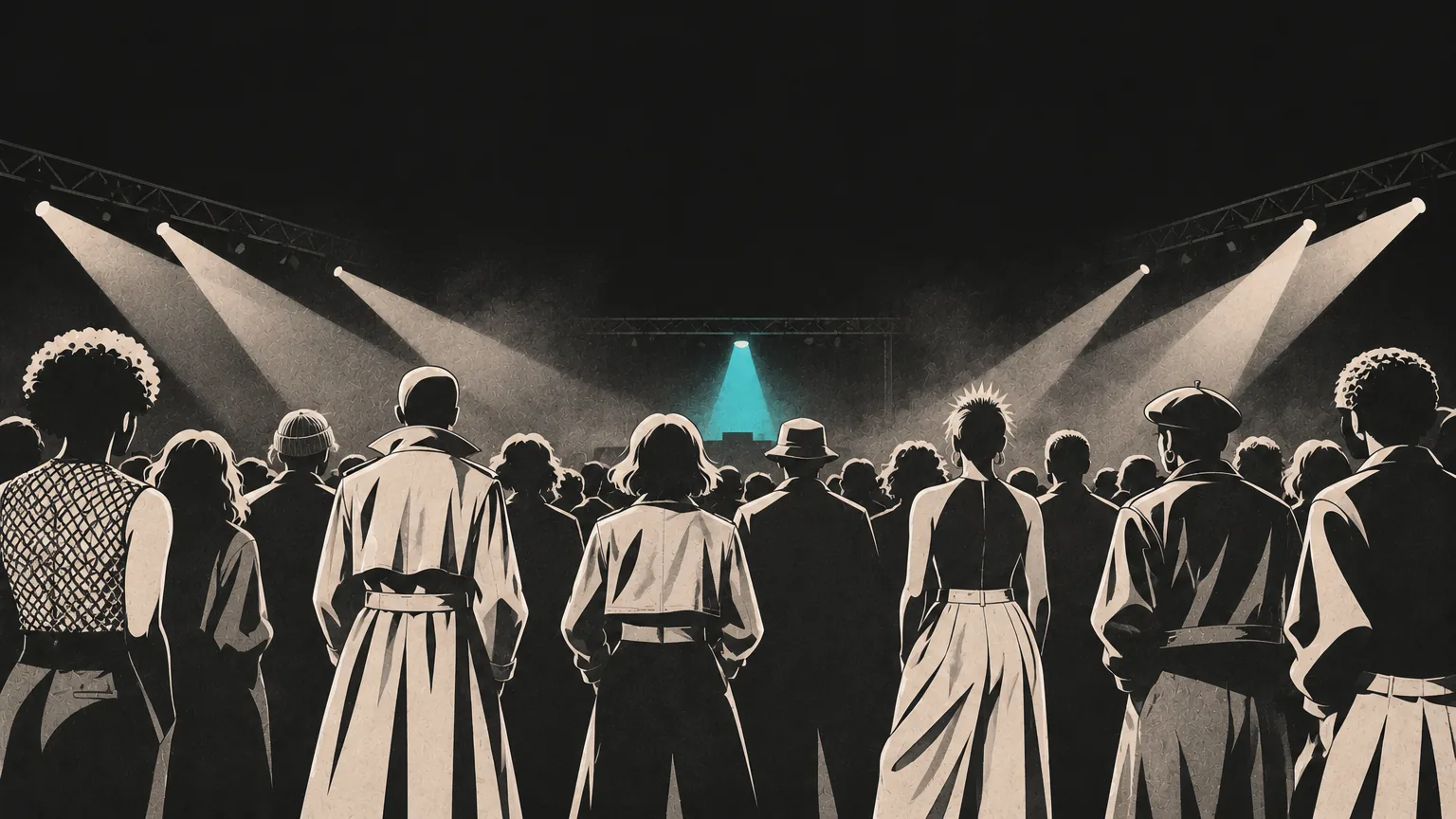
Music does not influence fashion only through the clothes singers wear. It intervenes in the way a garment is conceived, made, presented and consumed.
A relationship that runs in both directions
It changes materials because the places where people dance change, it alters proportions because the way of moving changes, it introduces technical demands because a garment has to withstand a stage, a concert or a night in a club.
The relationship also works the other way around. Music takes from clothing visual codes, identity, symbols and tools of communication: an artist builds an image with the dressed body, the record sleeve, the stage costume, the video and, today, digital presence.
This relationship has no single center. It is born in communities, clubs, streets, workshops and shops. Sometimes it is the musician who introduces a way of dressing; other times it is a tailor, a designer or a community that gives music a visual identity. Then the market, the entertainment industry and mass production step in.
For those who design fashion, the interesting question is not which artist wore which garment. It is understanding how a musical environment generated new product needs and how those needs were translated into materials, constructions, fit and production systems.
Past: when music begins to dress the body
Jazz: dress as public presence
In the 1930s and 1940s jazz did not produce only new sounds. Dance halls, clubs, cabarets and Harlem became places where clothing communicated belonging, confidence and social standing.
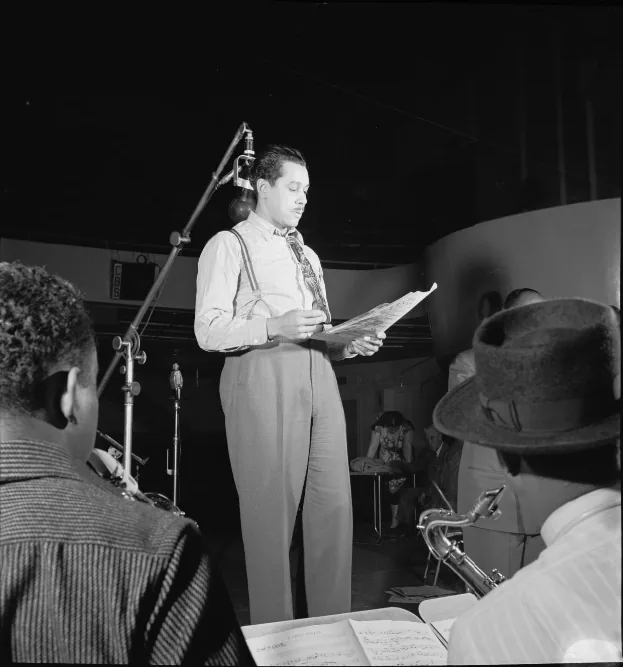
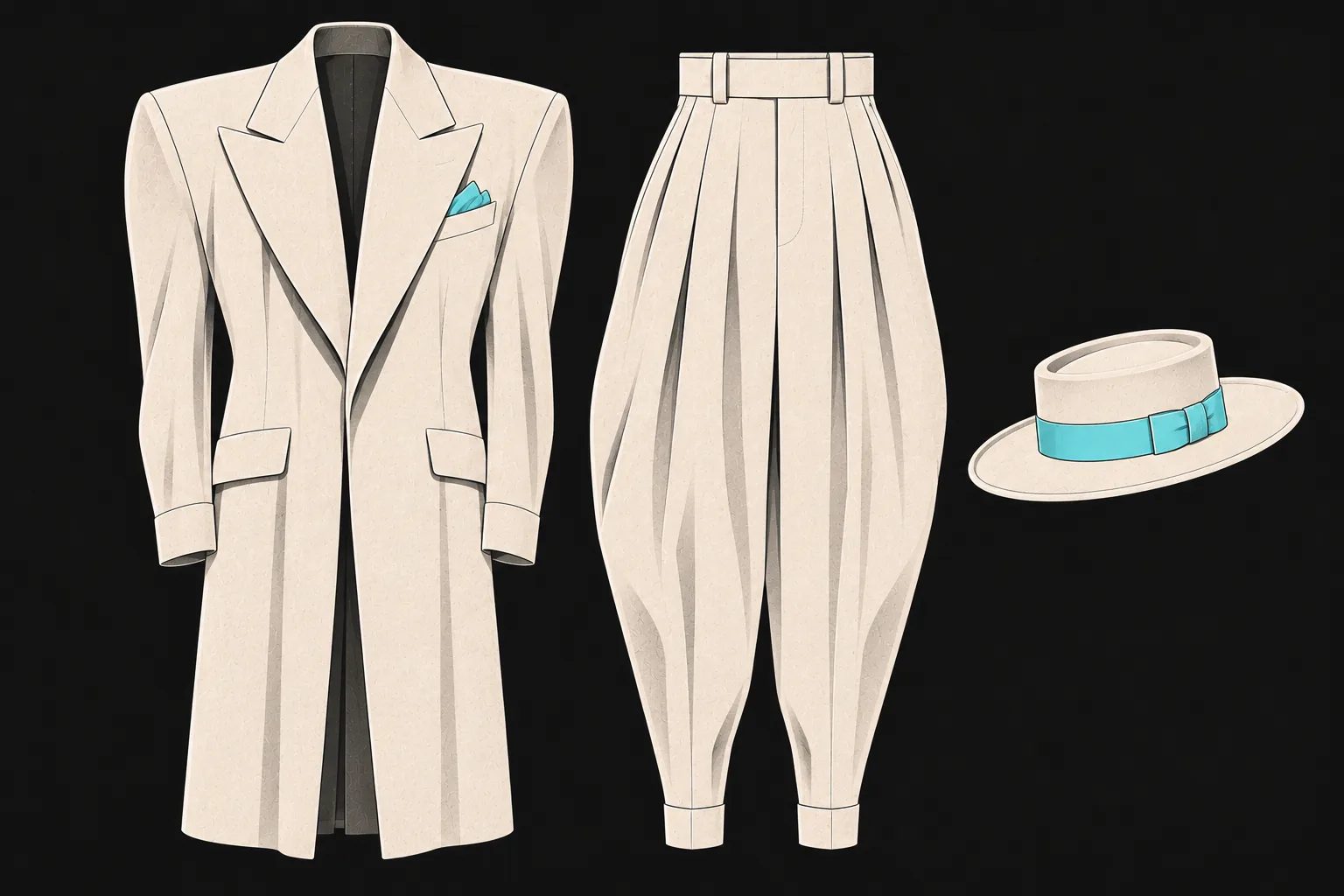
The most significant case is the zoot suit, which developed in the United States from the 1930s: jackets with wide shoulders and pronounced lapels, very full high-waisted trousers, a silhouette far from the proportions of the conventional men’s suit. Its origins are tied to the draped suits of Harlem’s dance halls, not to a single designer or musician. Cab Calloway helped make this aesthetic recognizable, and Dizzy Gillespie and Louis Armstrong also wore the suit, but crediting any one of them with its invention would be wrong: the phenomenon comes from an African American urban culture, from tailors and from individual alterations, with no single documented author.
One detail concerns construction. The trousers, full at the top and narrow at the ankle, allowed people to dance without the fabric getting in the way: the shape was not merely decorative, it answered to the moving body.
In June 1943, in Los Angeles, the clashes known as the Zoot Suit Riots showed how a garment could become a political and social sign. Young Mexican Americans were attacked by U.S. servicemen partly because of the way they dressed; during wartime fabric rationing, the amount of cloth these suits required was seen as a provocation. A musical phenomenon does not have to invent a product: it can help turn an existing garment into a cultural sign. The general mechanism is covered in Phenomenology of Styles.
Rock’n’roll: recovering the past and a youth identity
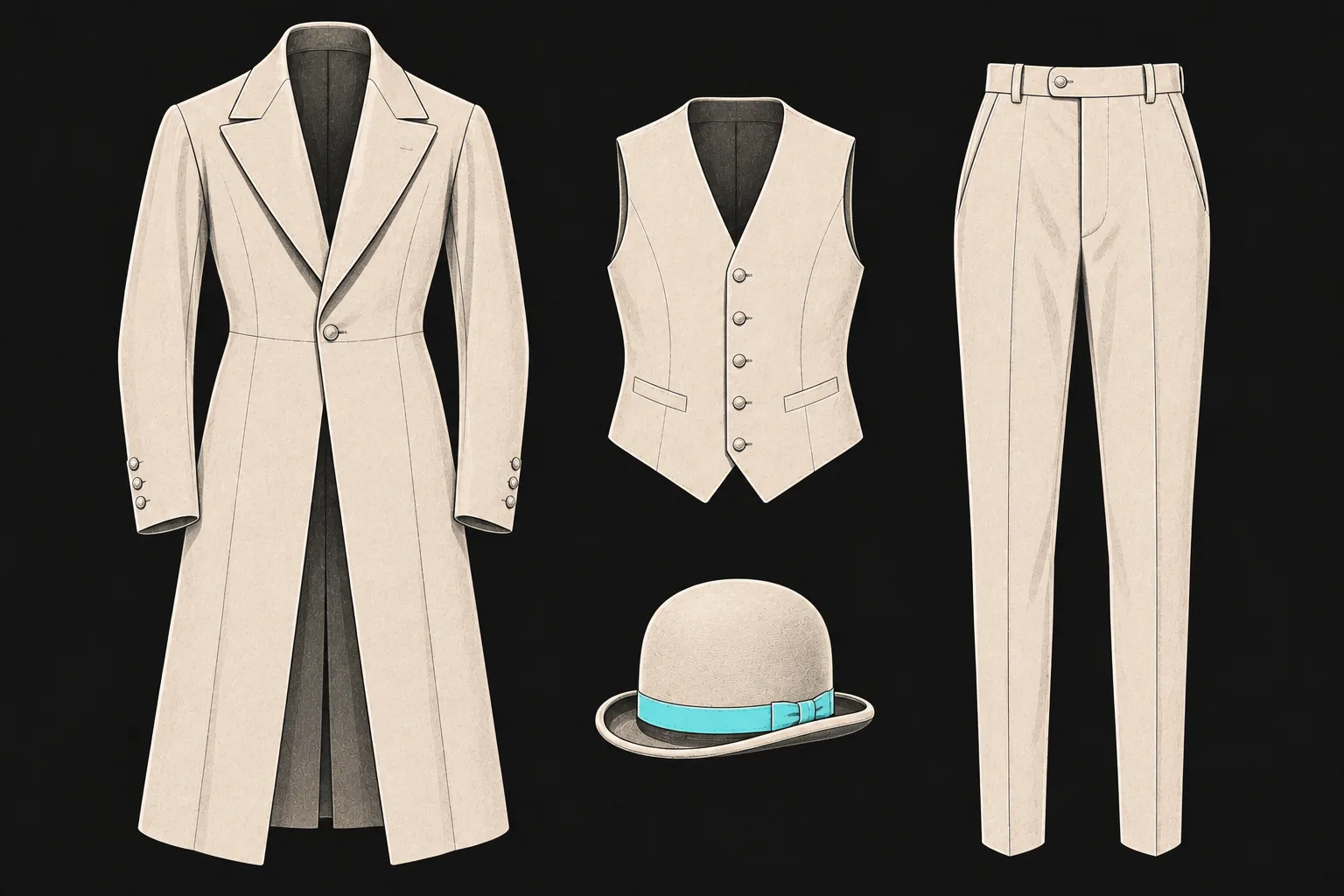
In the 1950s rock’n’roll accompanied the birth of a recognizable youth market. In Britain the Teddy Boys adopted jackets inspired by Edwardian dress, often with velvet collars, narrow trousers, thin ties and shoes with a pronounced sole.
The phenomenon did not come from a collection. Savile Row tailors had revived Edwardian elements, offering suits to ex-servicemen as well; some of these garments, in low demand, ended up in cheaper commercial circuits, and young workers reinterpreted them by changing proportions and combinations. Sources reconstruct this origin in different ways, and we do not present it here as a certain cause. What is certain is that the musicians were not necessarily the designers of the clothes: it was often young people, shopkeepers and local tailors who built the phenomenon’s material language.
An important step is the work of Vivienne Westwood and Malcolm McLaren. In 1971 they opened the shop Let It Rock at 430 King’s Road in London, dedicated precisely to reviving the Teddy Boy aesthetic; in 1972 they turned it into Too Fast to Live, Too Young to Die, shifting the focus to rocker and biker clothing. The shop shows a mechanism that would repeat: music feeds an imaginary, but it is commercial spaces and the people who run them that turn it into a recognizable proposal.
The 1960s and 1970s: from the scene to the product
With the youth music of the 1960s, clothing became increasingly bound up with artists’ communication and the circulation of images. Stage, record and music press worked as complementary tools: the artist did not simply present a song, but built a visual identity recognizable outside the concert as well.
In the 1970s disco music introduced a particularly direct relationship between movement, light and materials. In New York, Studio 54, opened in 1977 by Steve Rubell and Ian Schrager, became one of the places where fashion, music, entertainment and photography met: lights, sets, selection at the door and performers turned the evening into a visual event.
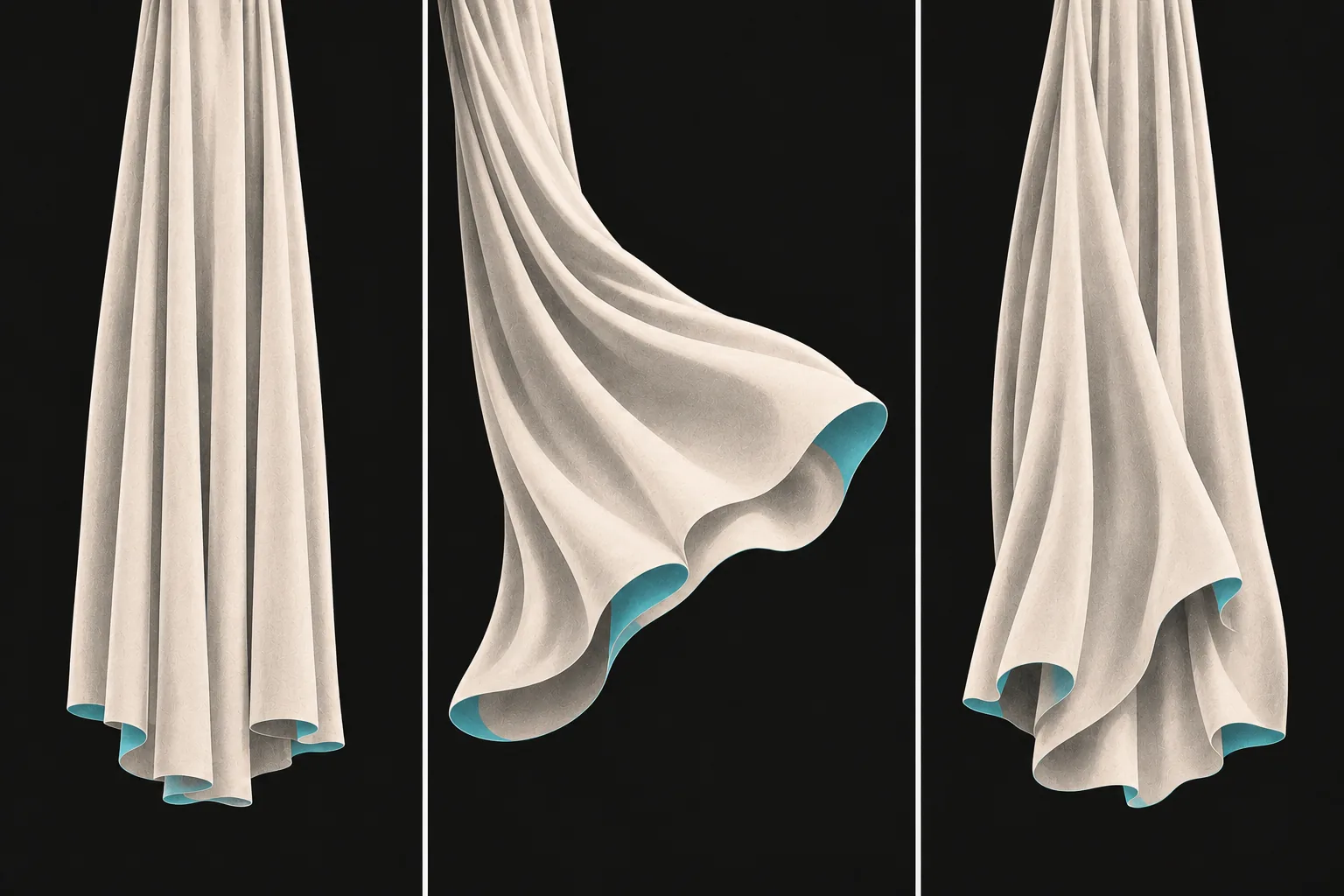
Halston’s work belongs to this context, with fluid dresses, essential lines and great attention to the fall of the fabric, in dialogue with a culture of the body that dances and is watched. Another example is Giorgio di Sant’Angelo, who in the second half of the decade developed close-fitting, draped dresses with stretch fabrics and surfaces that react to movement; an asymmetrical purple silk dress of his from 1976–1979, with moving panels and a flowing sleeve, is held at the ASU FIDM Museum.
Here the relationship with music becomes a matter of design: elasticity, weight, fluidity, reflections and freedom of movement count differently from in a garment for everyday life. Disco did not invent stretch fabrics, already present in other sectors, but made them desirable and visible in a new context of use.
Punk: the garment as message and surface to transform
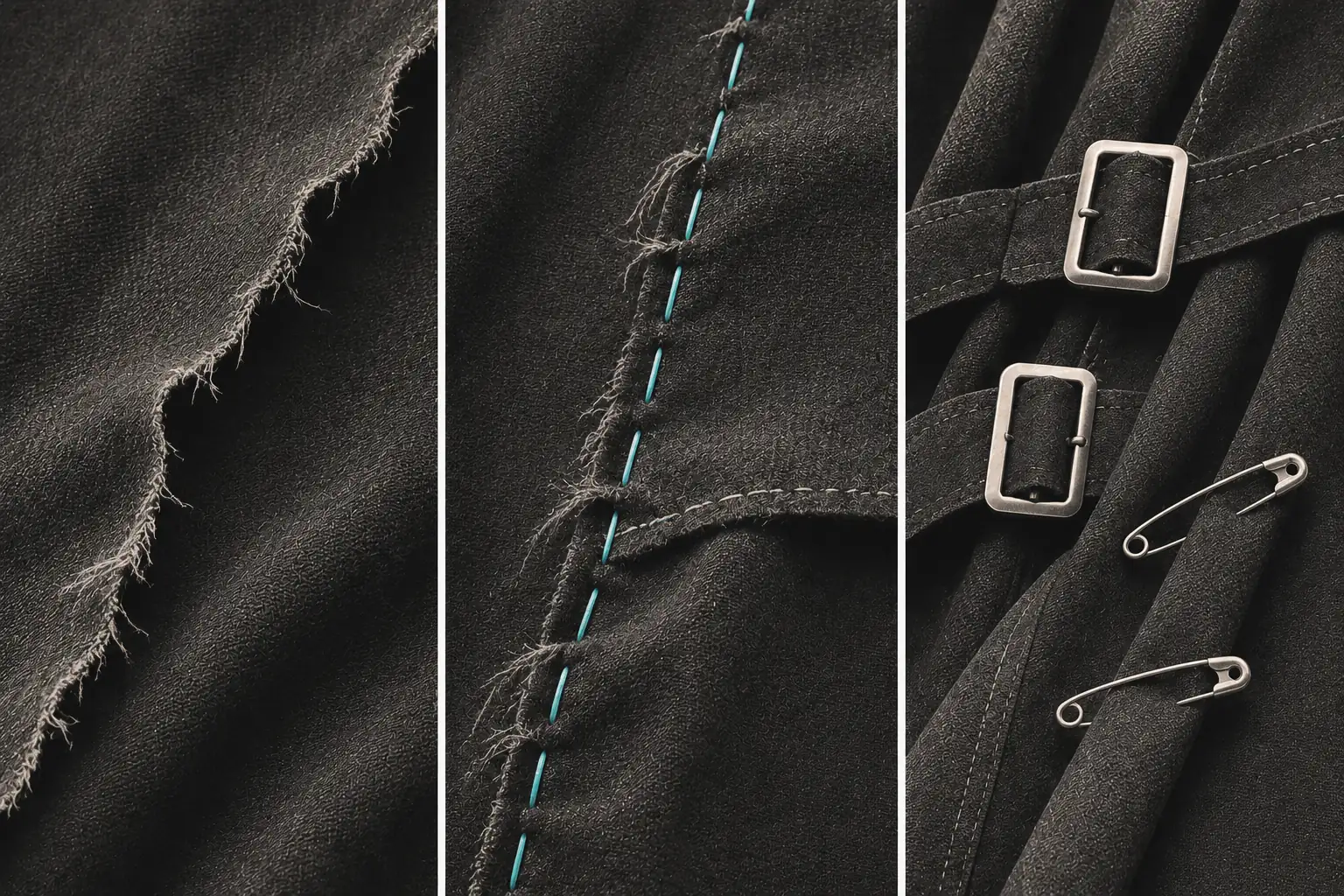
Punk in the 1970s took the relationship between music and clothing in another direction. The garment did not have to be elegant, comfortable or reassuring: it could be altered, cut, assembled and printed to communicate a position.
In 1974 Westwood and McLaren’s shop took the name SEX; in 1976 it became Seditionaries. The offer included PVC, rubber, garments inspired by fetish wear, military elements and T-shirts with provocative images and slogans. Westwood worked directly on the construction of the clothes; McLaren contributed the cultural direction and the link with music, above all through his management of the Sex Pistols.
We must not oversimplify: crediting McLaren with creating punk or Westwood with inventing all of its language would be wrong. The scene already had an independent history, with important centers in New York and London, and musicians and regulars objected to the idea of being the product of a commercial project. The collaboration between shop and band was nevertheless decisive in spreading a recognizable imaginary.
From a product point of view, punk introduced an interesting logic: the apparent flaw becomes intentional. Cuts, visible seams, pins, buckles and unconventional materials stop being problems to hide and become design elements.
Hip-hop: street, tailoring and industry
From the late 1970s into the 1980s hip-hop developed a relationship with clothing that started in the neighborhoods and urban African American and Latin American communities of New York. Tracksuits, denim, sneakers, caps, chains and jackets became elements of a visual language tied to music, dance and everyday life. There is no single inventor: different communities and territories produced their own interpretations.
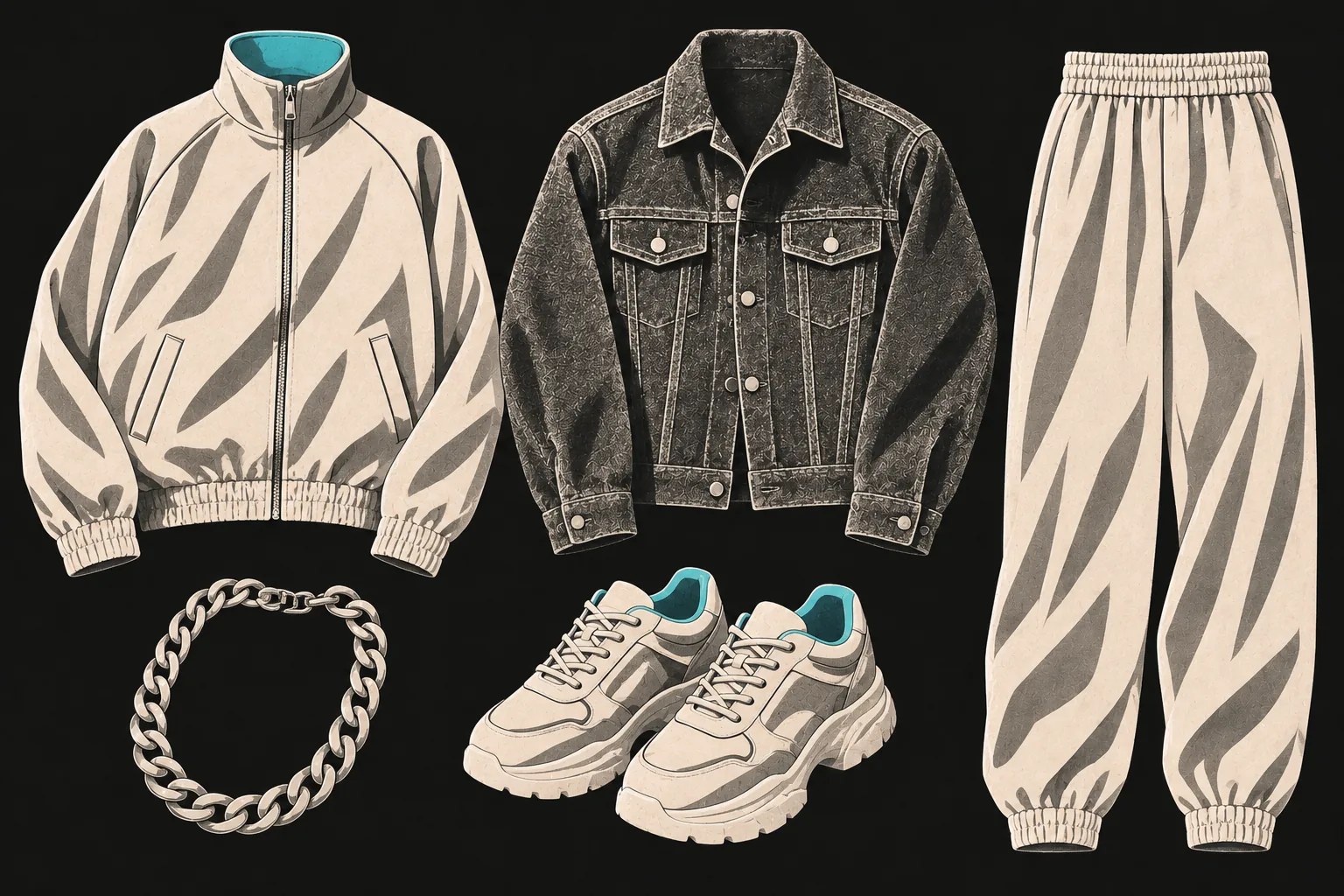
A key figure for understanding the relationship between music and tailoring is Dapper Dan, born Daniel Day, who opened his atelier in Harlem in the 1980s. Dan made custom pieces with graphic motifs inspired by the visual codes of luxury, transferred onto sporty and urban silhouettes, for hip-hop artists, athletes and other figures of the New York scene. His work was not about applying a logo: it included pattern-making, choice of materials, construction and customization of the garment. Alongside him worked less well-known figures, such as the tailor Big Sek, and this is an important detail: behind a recognizable aesthetic there is a chain of skills that includes those who design, cut, sew and modify the product.
Hip-hop thus helped shift the center of innovation: not only from the runway to the street, but also from large industrial systems to independent workshops. Later commercial spread should not erase this origin: the success of a visual language and the economic recognition of those who developed it are two separate matters. The passage to the market, with the Run-DMC sneakers, is covered in Phenomenology of Styles.
Club culture and electronic music: clothes for a whole night
At the end of the 1980s electronic music and Acid House developed a new relationship with spaces of entertainment. In 1988, in London, clubs such as Shoom, Future, The Trip and Spectrum became reference points for a scene that also extended to warehouses and industrial spaces, and the smiley appeared on badges, hats and T-shirts.
Club culture raises different demands from stage costume. The body moves for hours, in crowded, hot, dimly lit environments; the wardrobe favors informal solutions, light layers, sportswear, recognizable accessories and customizable objects. The relationship between music and fashion depends less on the individual artist and more on communities, DJs, venues and collective rituals. Here too commercialization came later: the Acid House scene progressively turned into a commercial product after 1988.
Stage costume: a product designed to work
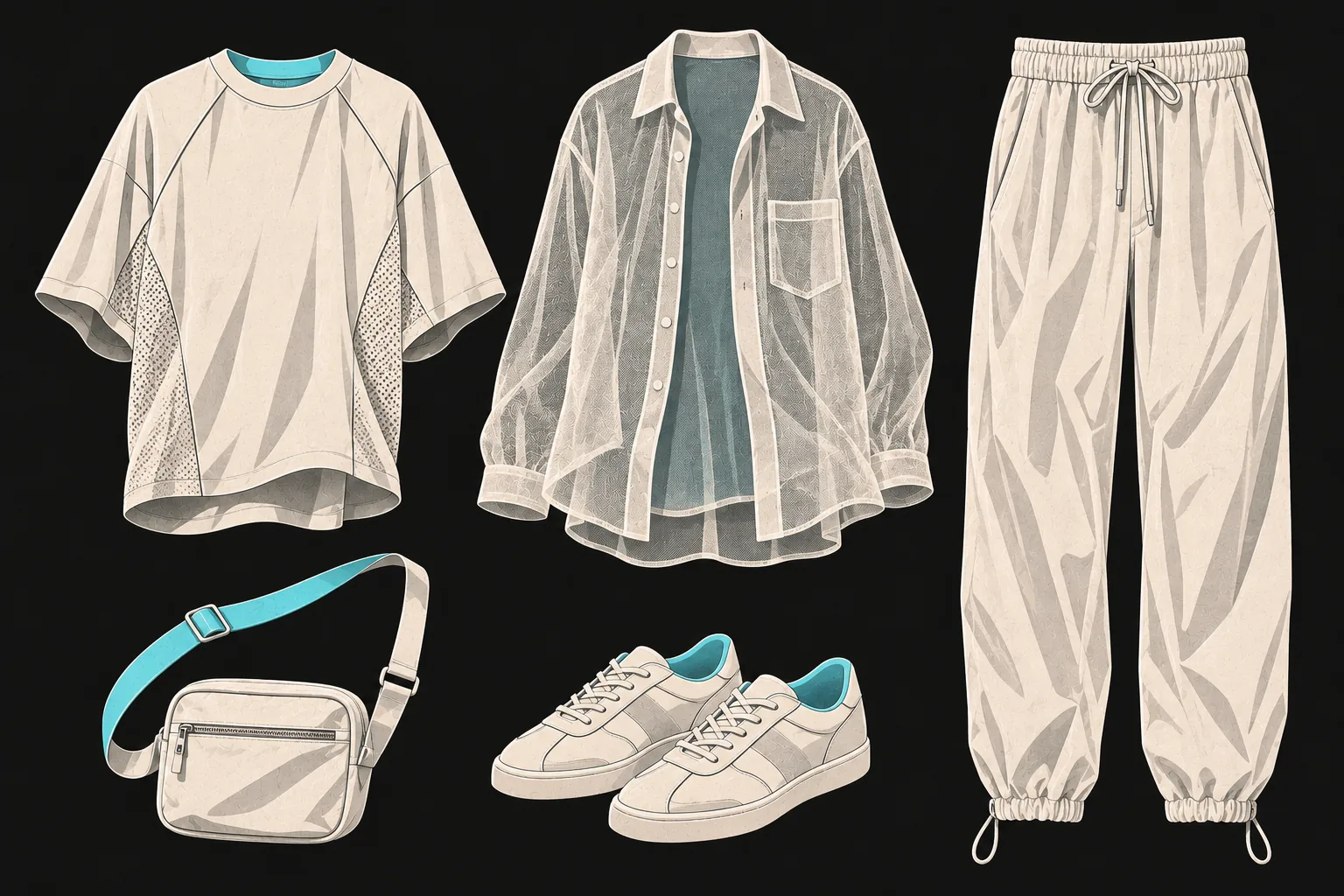
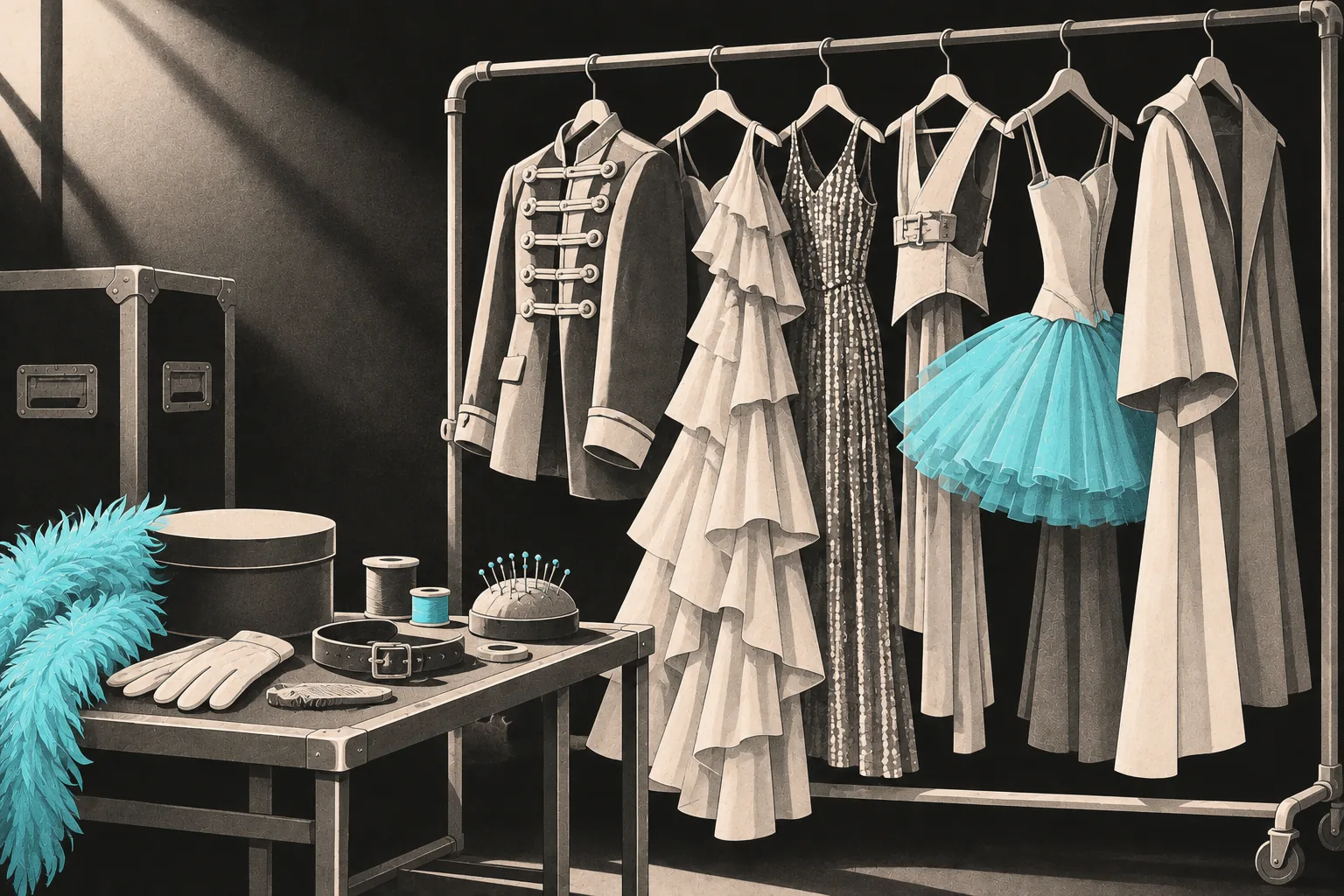
A garment intended for a concert or a tour cannot be designed like a normal collection piece. It has to work in constantly changing conditions: wide movements, sweat, varying temperatures, intense lights, microphones, cables, accessories, very quick changes.
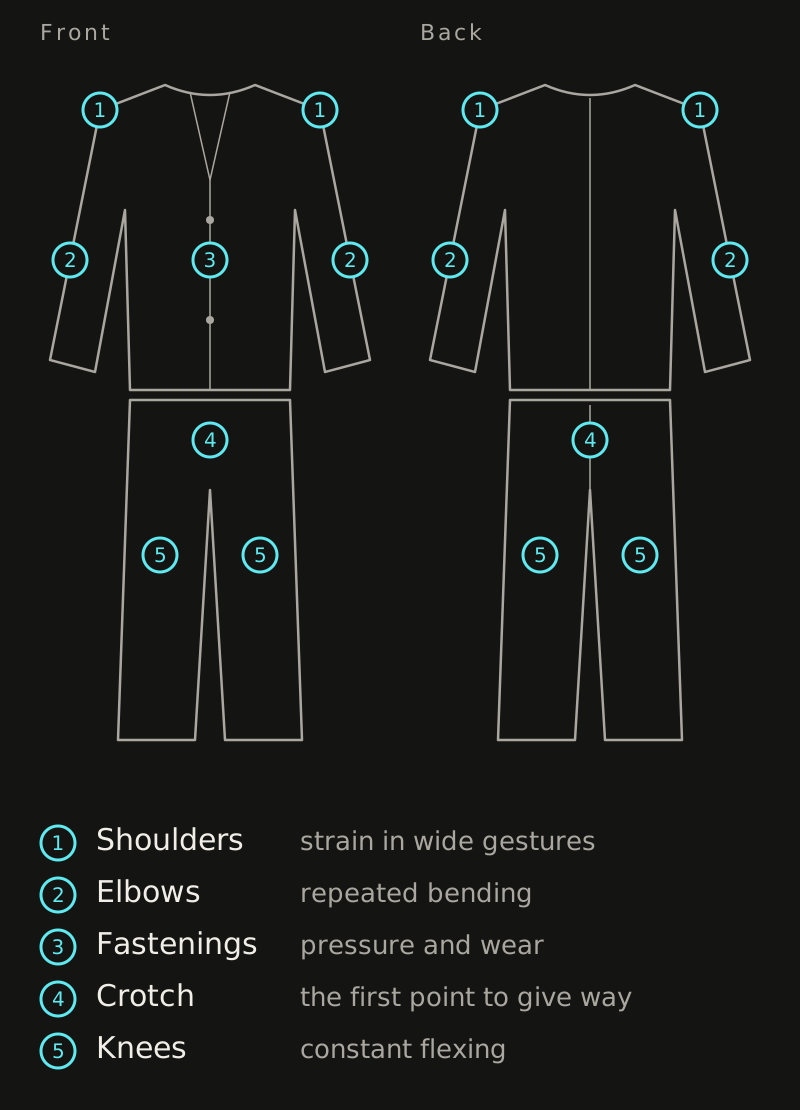
The first problem is fit. The garment has to follow the body without hindering repeated gestures, and the areas under most strain (shoulders, crotch, knees, elbows, fastenings) need particular attention.
The second concerns materials. Weight, elasticity, breathability, abrasion resistance and behavior under lights have to be assessed together: a fabric that works in a photograph can be too heavy, hot or stiff during a performance.
Finishes change too. Buttons, zips, applications and decorations have to stay secure, create no pressure points and not become dangerous during movement; metal or pointed elements call for specific assessment in relation to the choreography and the setting.
Durability is another requirement. A costume used for dozens or hundreds of performances has to be cleaned, repaired and reconditioned without losing function. Maintenance is not a secondary activity: the wardrobe teams of professional theater handle dressing, quick changes, accessories, repairs and the preparation of costumes before each performance, with less visible skills such as size control, organization of spares and management of alterations.
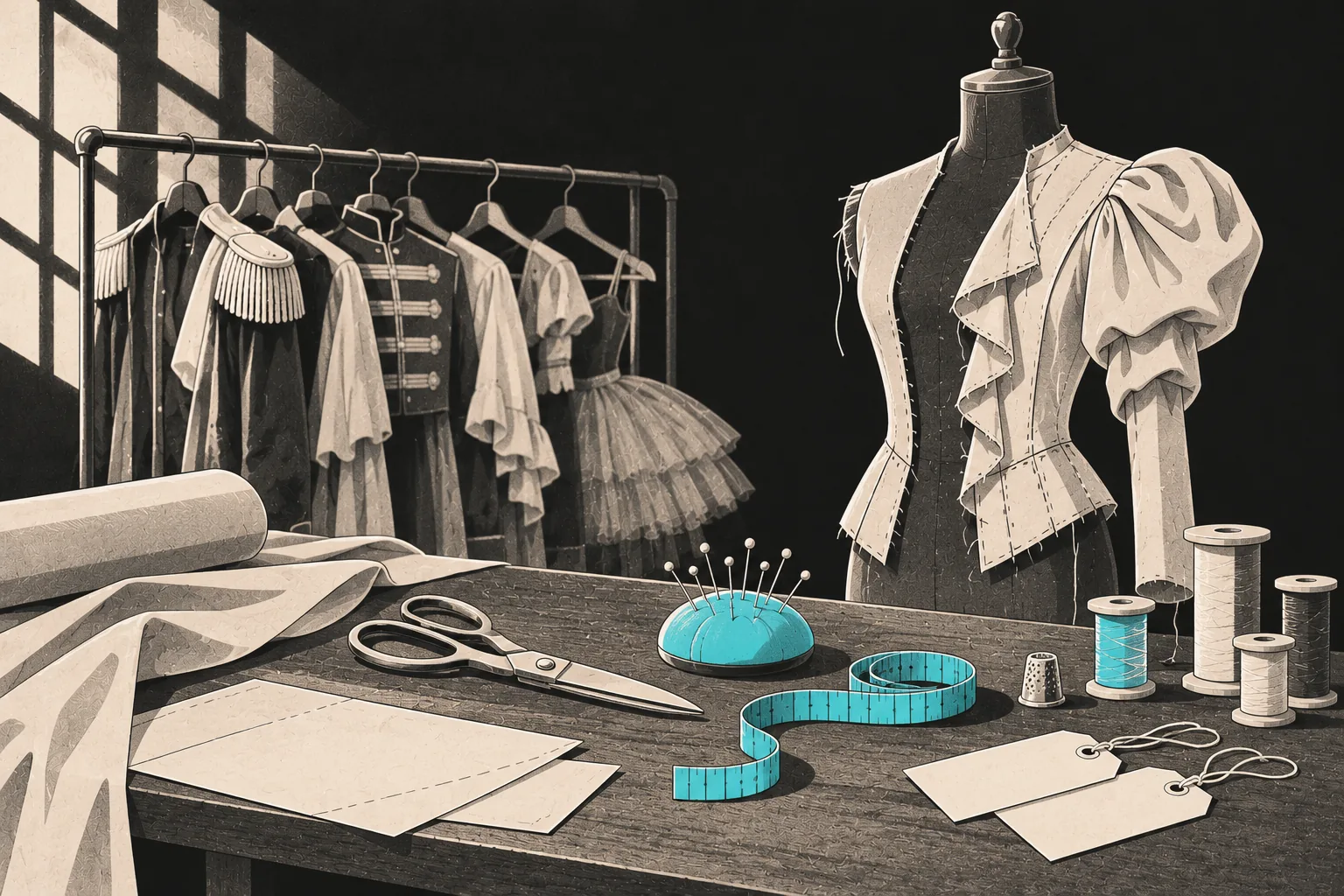
Stage costume is therefore a technical product with a precise performative function. Those who design fashion can draw a method from it: start from the conditions of use, observe the movements, identify the stress points, choose compatible materials and plan for maintenance and repairability from development onwards. A spectacular costume that does not let the artist move well is not a successful project. The requirements described here are design principles, not a technical standard: they vary with material, production and place of use. The relationship between costume and the moving image is covered in Cinema and Visual Culture.
The economic relationship: from the artist’s identity to the product
The relationship between music and fashion is not only cultural: it is also an economic system in which image, distribution and recognizability can generate value. The mechanism goes through three moments.
The first is the construction of the visual identity. An artist adopts a way of dressing, often with the work of stylists, costume designers and designers, and the image is repeated in concerts, photographs, covers and videos until it becomes recognizable. The second is the transformation of the image into a product: merchandising, garments associated with a tour, limited editions, commercial collaborations. The third is distribution: concerts, pop-up shops, digital platforms and online sales reach different audiences.
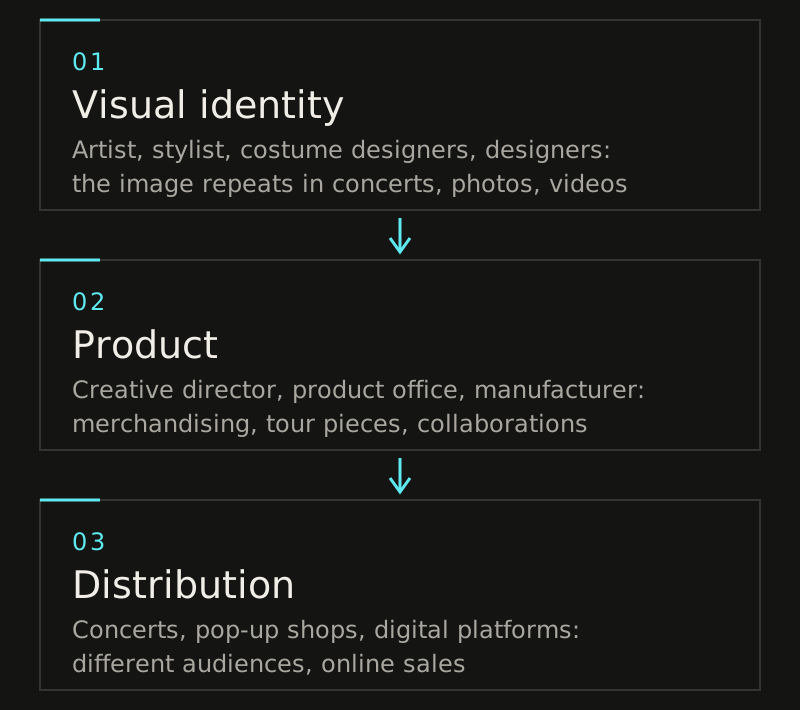
These steps are not necessarily managed by the same people. The artist may be the face of the proposal, while the project is developed by a creative director, a stylist, a product office, a manufacturer and a distributor. Creative value and commercial value do not automatically coincide.
The Dapper Dan case also shows the problem of recognition. His creations helped define an aesthetic that was later taken up and imitated by larger operators: producing a new language does not guarantee control over its commercialization.
Music merchandising has a particular feature: buyers often do not purchase only a garment, but a memory, a sense of belonging or the chance to make their relationship with an artist visible. This changes the logic of the product: the graphics, the concert date, the place, the print run and the story of the event can carry a perceived value greater than the construction complexity of the garment.
The risks are specific. The first is homogenization: a language born spontaneously in a community and turned into a standardized product can lose what made it meaningful. The second is the ephemeral: a trend tied to a song, a tour or a video can last very briefly, and excess production leads to unsold stock and waste. The third is dependence on image: if the value of a garment depends only on an artist’s presence, the product loses interest when the artist’s popularity changes.
For those developing collections, this means distinguishing between a project that has a quality of its own and a product that works only thanks to the fame of whoever presents it.
Present: music as a system for spreading trends
Today the relationship between music and fashion no longer depends only on records, magazines, concerts and videos. Digital distribution has multiplied the points of contact between artist and audience: a song can be discovered through a video lasting a few seconds, a choreography, content posted by a fan or a fragment used by a creator. Music becomes a component of visual content that circulates independently of an album’s release.
Streaming and short videos
With streaming, content is available continuously. For fashion, the consequence is not simply more exposure for artists: images, performances and aesthetic references can be picked up, altered and distributed without waiting for the pace of editorial communication. The speed of circulation rises, but it does not guarantee that a trend will last.
A musical fragment can become recognizable through a gesture, a sequence of images or a combination of clothing and movement; viewers may meet the image first and the full song only later. For those who design, the visual legibility of a product takes on a new role: a detail, a silhouette or a material can be recognized in a few seconds, even without knowing the collection it comes from. The risk is designing only for the fragment: a garment made to be recognizable in a vertical video but without a convincing function off the screen.
Concerts as visual events
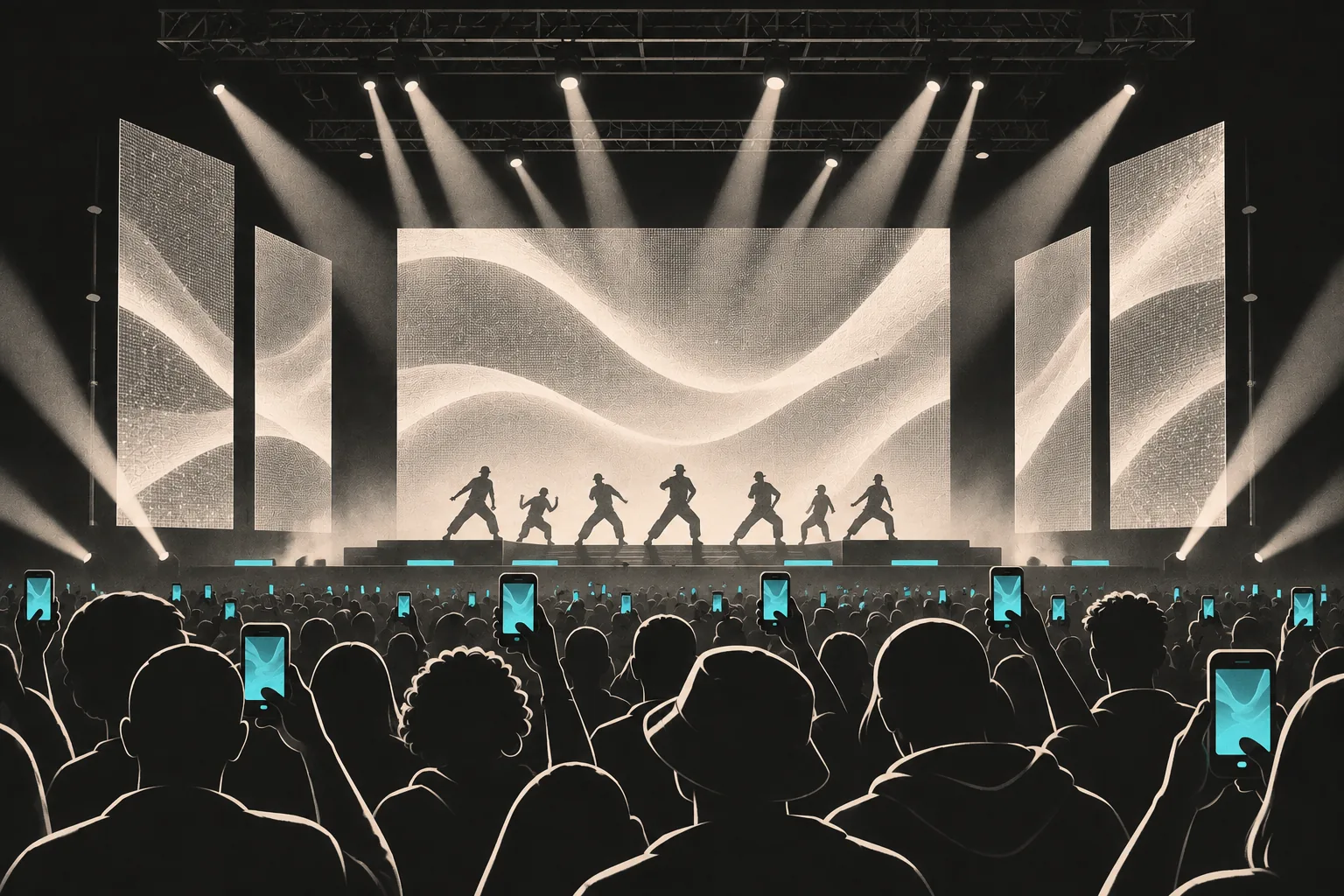
The contemporary concert is often a complex system of images, lights, sets, video, choreography and costume changes. The costume is no longer just a characterization of the performer: it can help build an entire narrative sequence. The audience watches the artist live but also produces photographs and recordings that circulate online, so a garment has to work on several levels: live, in professional footage, in amateur videos and in images seen on small screens. Contrasts, reflections, volumes and details change function depending on viewing distance and lighting.
Niches and microgenres
Another change concerns the fragmentation of audiences. There is no longer a single dominant musical language able to represent a generation: communities develop around genres, subgenres, local scenes and independent artists. A community may recognize itself in a type of footwear, an accessory, a combination of materials or a way of customizing existing garments. The designer has to distinguish between an element that is truly meaningful to a community and a detail picked up superficially by commercial communication. Observing a musical environment also means studying its habits, not just collecting images.
Future: when the musical body is no longer only physical
The relationship between music and fashion could change again with the spread of virtual environments, avatars, interactive garments and generative tools. Some technologies are already in use, others are experimental, others still are design hypotheses: it is important not to confuse the levels.
Virtual concerts and avatars
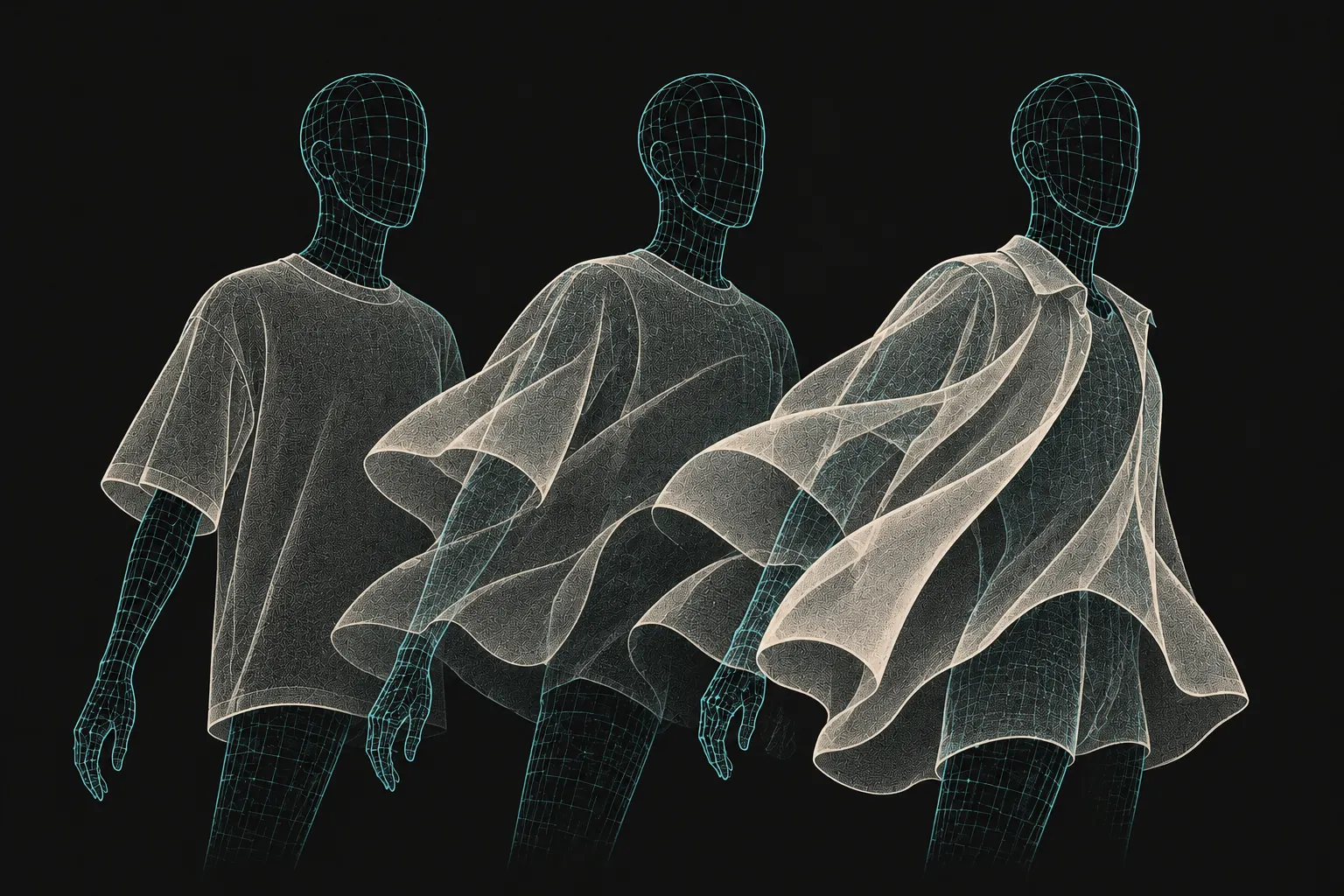
Digital environments already allow performances in which the artist’s body is represented by an avatar. Clothing does not have to respect the constraints of a physical garment: it can change shape, size, surface and behavior during the performance, reacting to music, light or audience interaction. The project also shifts toward defining a digital silhouette. One possible development is the virtual wardrobe, in which the designer works with animators, 3D artists and those responsible for the digital experience; the challenge will be to maintain a recognizable relationship between visual identity, the represented body and the behavior of the garment.
Connected and interactive garments
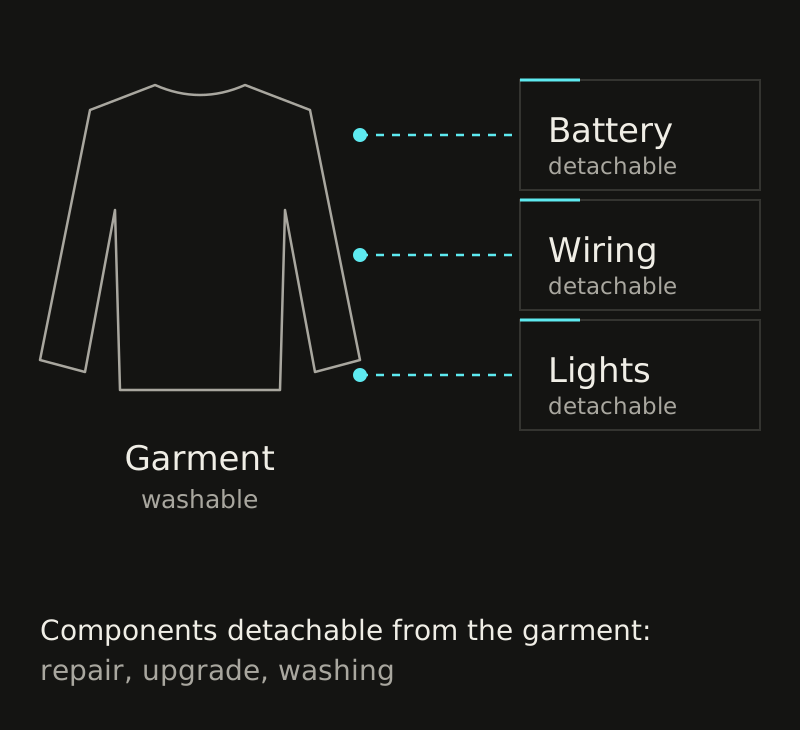
Technology makes it possible to integrate sensors, lighting elements and electronic components into wearable products. In performance, these systems can change the look of the garment in relation to movement, music or the environment, but they require additional skills: power supply, wiring, connections, insulation, weight, maintenance. An interactive garment has to be assessed as an electronic system too, and its reliability cannot depend only on the quality of the making. One possible direction is modular components, detachable from the garment to make repair, upgrade and washing easier. It is a design hypothesis, not an already standardized solution.
Artificial intelligence: music, image and identity
Generative artificial intelligence raises a further question: creating music, voices and images without the artist necessarily being present. A musical identity could be associated with a digital body, a virtual wardrobe and a visual production generated with automated systems, and a designer could work on collections for artistic identities that exist in both physical and digital form.
This brings questions of attribution, consent and rights: who is the author of generated content, and with what human contribution; how far a person’s voice or appearance can be reproduced; how much transparency is owed about what is generated. This does not mean that every use of an avatar or a synthetic voice is unlawful. It means that authenticity, consent and ownership of rights will increasingly enter the design of musical and visual experiences, including the right to use an artist’s image to present and sell a product.
A new creative chain
Looking ahead, design could involve fashion designers, pattern makers, 3D developers, materials specialists, electronics technicians and image professionals together. The physical garment and the digital one could become two versions of the same project, with different characteristics and constraints. This will not necessarily replace traditional costume: it is more likely that new types of product and new ways of distribution will be added. The interesting question is not whether fashion will become digital, but which elements of the physical project will remain indispensable and which new skills will be needed. A garment must still have a function, an identity and a construction logic, even when it exists only as a digital representation: it has to be designed for a body, an environment and an experience.
What it means for those who design today
The relationship between music and fashion can be a research tool, but it requires a method different from collecting images. A musical environment should be observed as a system of people, spaces, gestures, materials and habits, and the project has to start from these elements, not from reproducing an already recognizable look.
Observe gestures before clothes. The first question is what people do. A dance environment demands freedom of movement; a concert may demand durability, lightness and ease of changing; a street-based scene may value layering, customization and longevity. The gesture suggests product needs that translate into fit, construction and choice of materials.
Read rhythm through proportions. Music can be a reference for studying the relationship between volumes, repetition and movement: a regular rhythm may suggest sequences and modularity, a fragmented composition may become a prompt for working on overlaps and discontinuities. It is not about turning a sound into a garment, but about using musical structure to explore design possibilities.
Study materials in the real environment. A reflective fabric may be interesting under stage lights but excessive in everyday life; a light material may work for movement but need reinforcement in the most stressed areas. The behavior of the material has to be tested in the conditions in which the product will be used.
Understand rituals. The way people dress before a concert, a DJ’s preparation, the choice of a garment for an evening, the customization of a jacket are behaviors that can become research sources. They should not be transferred directly into the product: they can suggest functions, details, accessories and ways of use.
Distinguish inspiration from imitation. A musical environment is not a catalog of references to copy. Reproducing a punk jacket, a hip-hop tracksuit or a disco dress often means taking the result without understanding the process that produced it. It is more interesting to recover the underlying principle: the transformation of an existing garment, freedom of movement, contrast between materials, customization, the relationship between body and space.
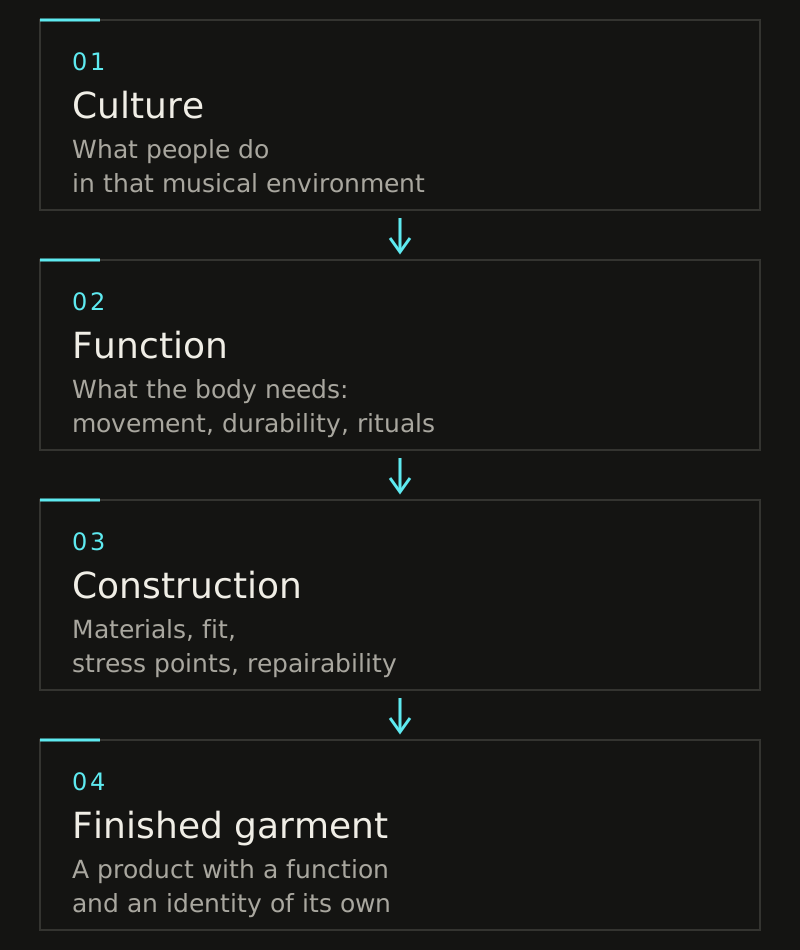
Music becomes a source of design when it helps to formulate a new question about the product. The fundamental step is from culture to function, from function to construction, from construction to the finished garment.
Music becomes a source of design when it helps to formulate a new question about the product.