
Phenomenology of Styles
How the language of fashion emerges, spreads and transforms: from subcultures to the market.
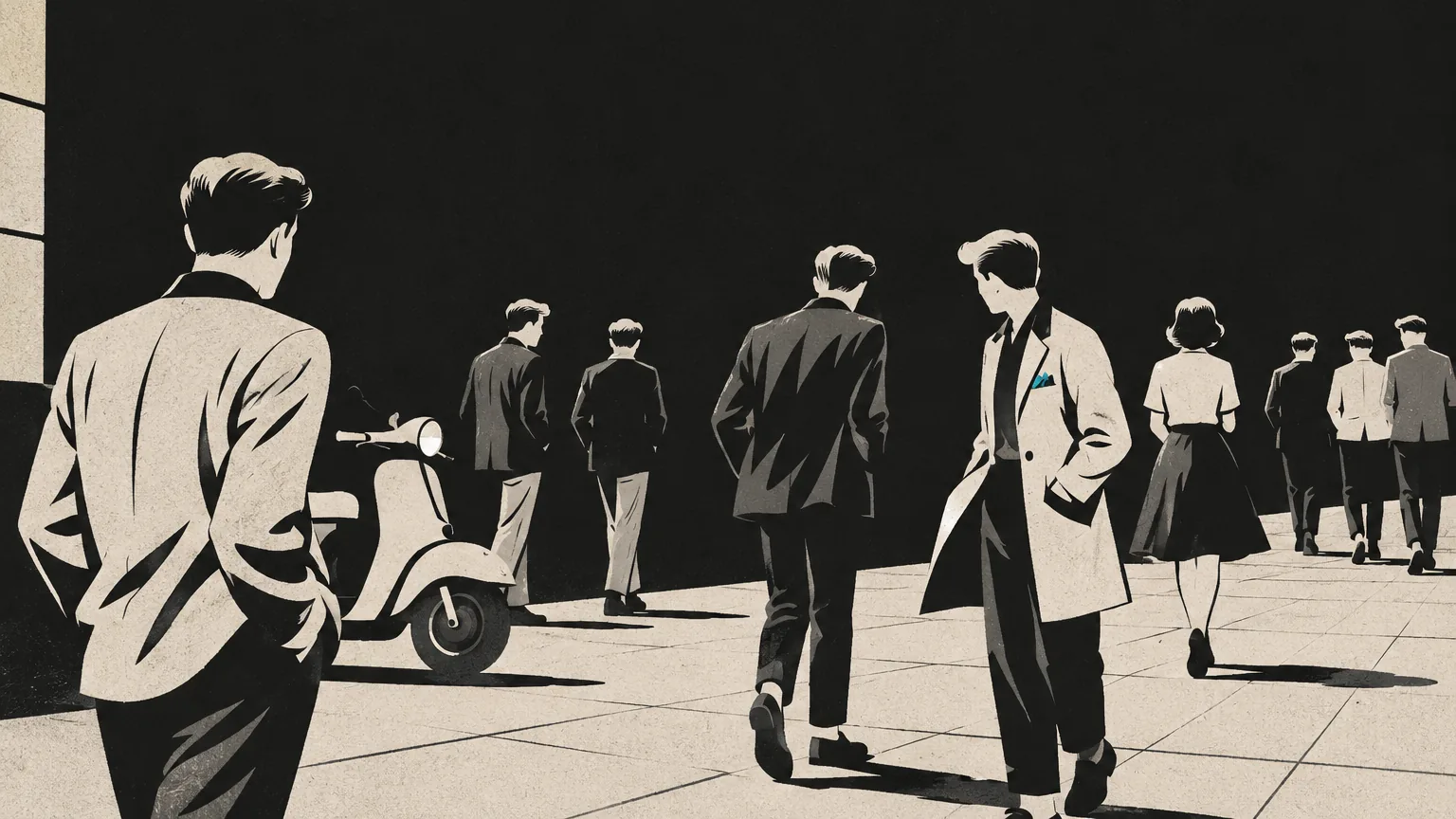
A style is not just a set of garments. It is a system of codes that is born in a context, recognized by others, transformed through use and, sometimes, turned into a product.
A style does not necessarily begin with a design
And it does not necessarily come from those who design clothes: it can come from those who wear them, from a need, from a social group or from a contamination. Design often intervenes later, when those behaviors become legible and translatable.
When we look at a style that is already recognizable, it is easy to assume that someone designed it. A silhouette, a combination of materials, a particular way of wearing a garment seem to form a coherent language. But that coherence often emerges only afterwards.
A style can come from individual behaviors that repeat, from groups that share the same references, from economic conditions, from practical needs or from a reaction to what is considered normal. Sometimes a designer steps in; in other cases, design work arrives much later.
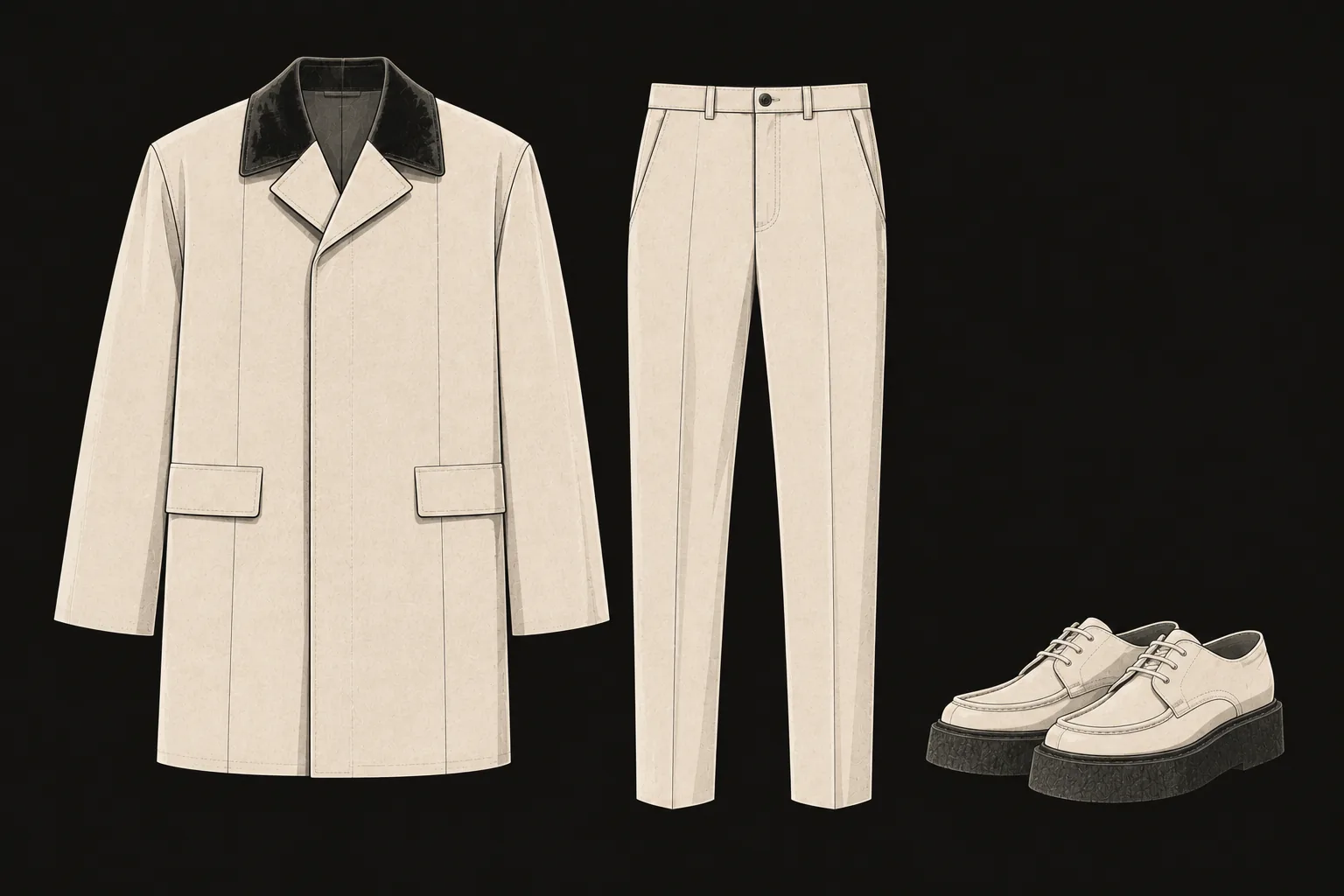
The Teddy Boys of 1950s London were not the result of a single plan. Jackets inspired by Edwardian dress, narrow trousers, thick-soled shoes and elaborate hairstyles made up a recognizable image because a group of young people had adopted and reworked existing elements, turning them into a sign of belonging.
The important distinction is between origin and recognition. A phenomenon can exist before anyone names it, photographs it or describes it as a new style. For those who design, this changes the point of observation: instead of looking straight away for an aesthetic to reproduce, we need to understand which behavior generated it.
Five ways a style takes shape
There is no single path. Some phenomena start from decision-making centers and spread toward the public; others emerge on the street and are recognized by the industry later; others still come from the transformation of functional clothing. These are not rigid categories: they can overlap and feed one another.
From above: design becomes a reference
The path from above occurs when a designer, a fashion house or an artistic movement proposes a new form that others adopt and reinterpret.
A clear case is Christian Dior’s New Look, presented in Paris on 12 February 1947. The house’s first collection offered rounded shoulders, a narrow waist, emphasized hips and full skirts. Carmel Snow, editor of Harper’s Bazaar, helped make the name New Look popular. It came after years of wartime restrictions, material shortages and functional clothing, and introduced a different idea of volume and of fabric consumption.
But the model did not spread only because a great couturier had designed it. Press, presentations, production, commercial interest and the ability to reproduce some of its codes in other segments of the market all played a part. The path from above is not an imposition: it requires a proposal to find favorable conditions in which to be recognized and adopted.
From below: the street comes before the collection
The opposite path starts with people who do not necessarily work in fashion.
In postwar Britain the Teddy Boys built their recognizability with garments that combined historical references, urban clothing and rock and roll.
A decade later the Mods developed a different language: boxy jackets, shirts, thin ties, slim trousers, Italian-inspired suits and scooters defined an image tied to music, leisure and care for appearance. The photographs of Henry Grant and Roger Mayne document these behaviors in 1960s London.
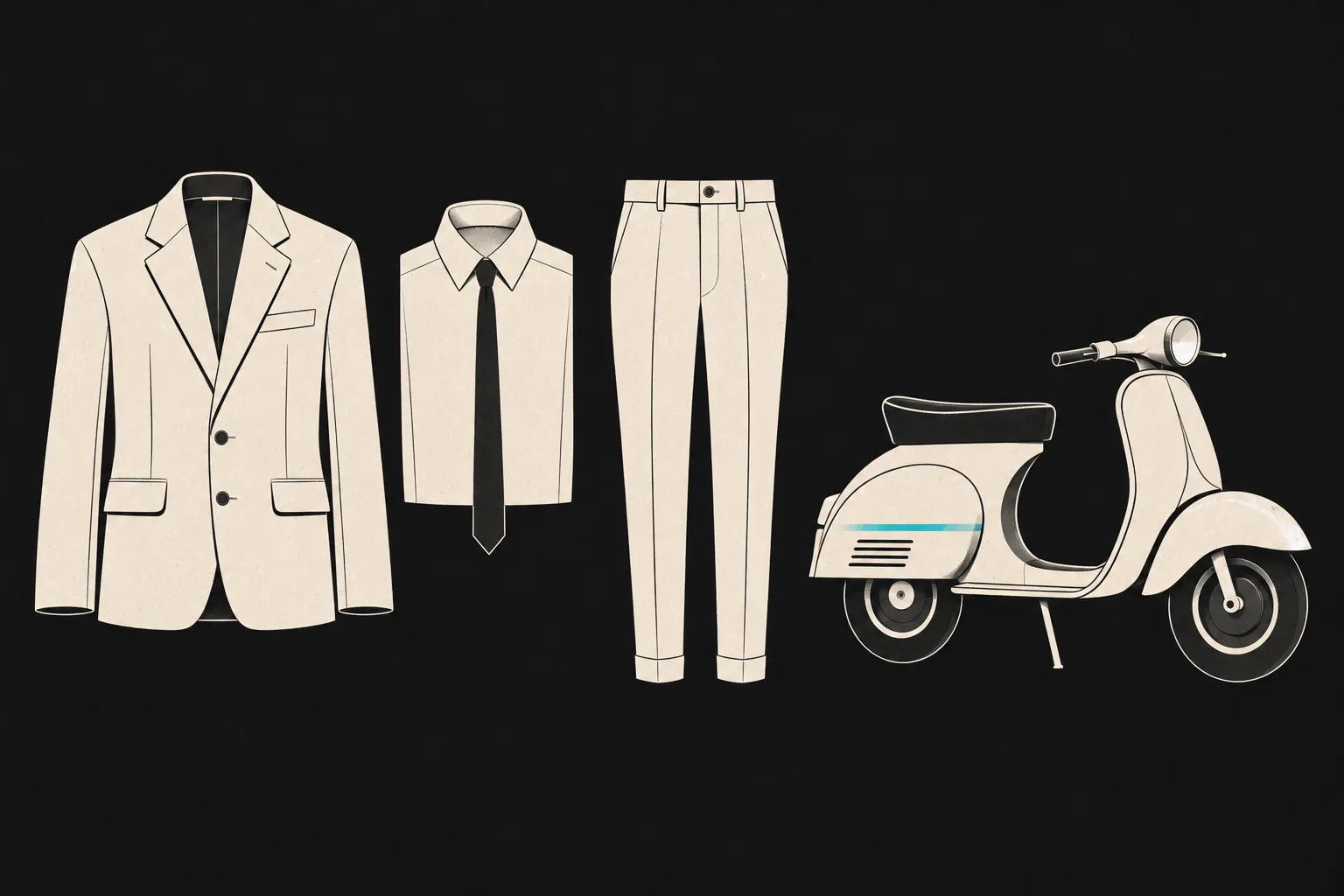
It was not just a matter of wearing certain clothes. The choice of clothes, of places to go, of music and of means of transport built a recognizable identity.
By contamination: different elements produce a new language
Contamination happens when elements from different contexts are combined until they produce a new coherence. British Punk of the 1970s is an example: its aesthetic did not come from a single tradition, but from references to military clothing, the motorcycle world, fetish wear, earlier youth culture and handmade customization.
In London, Vivienne Westwood and Malcolm McLaren helped make this language recognizable in the shops at 430 King’s Road: Let It Rock in 1971, SEX in 1974, Seditionaries in 1976. The relationship with New York was just as important: McLaren frequented the music scene around CBGB and observed the way Richard Hell dressed. The visual language of London Punk was also formed in this transatlantic exchange.
Contamination, then, is not a sum of quotations. It is a transformation in which separate elements acquire a different meaning.
By functional need: use generates form
Not all styles are born to communicate belonging or difference. Some come from concrete needs, and military clothing is a historic source of changes in the civilian wardrobe.
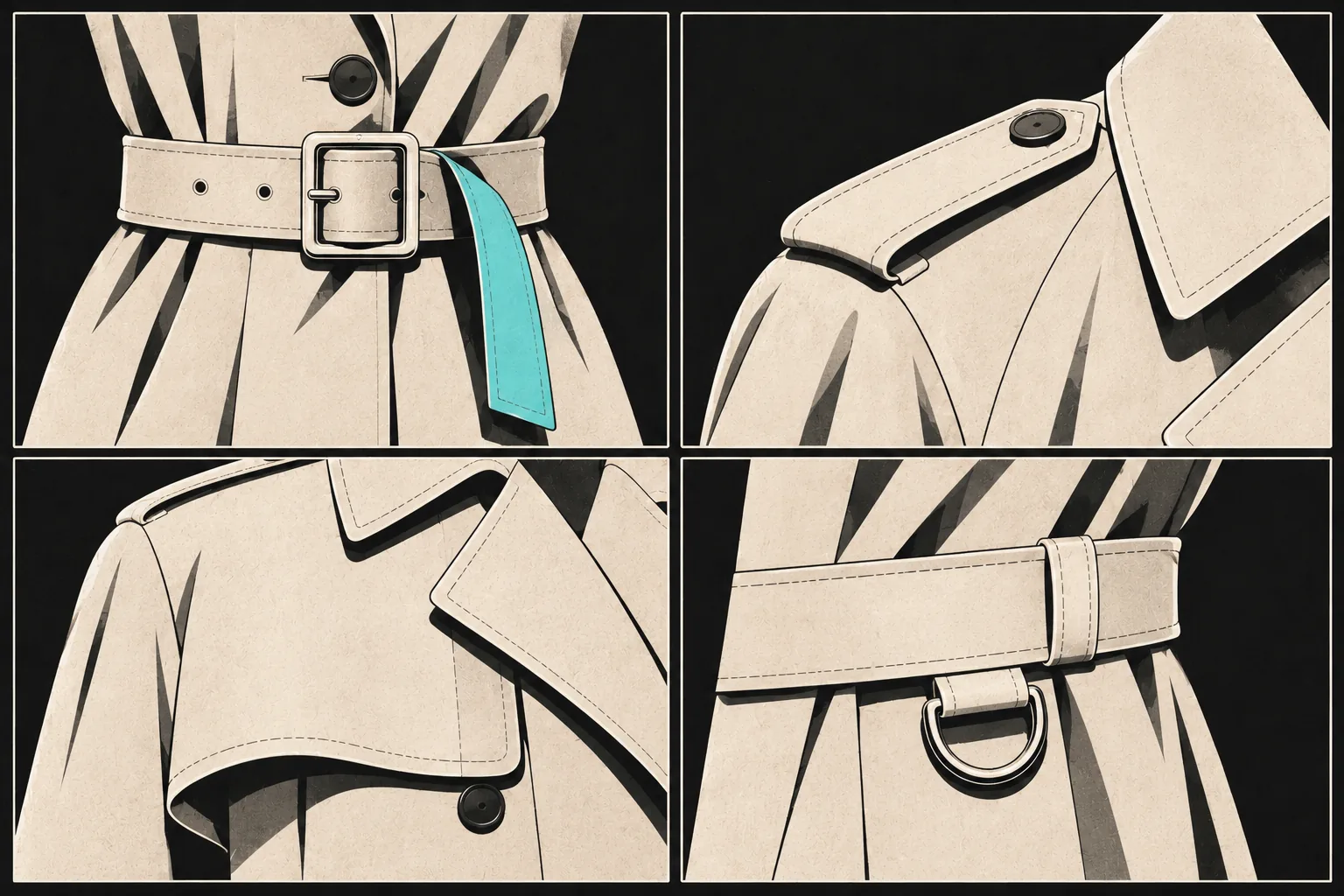
The trench coat is the best-known example. In 1901 Burberry was commissioned to develop a lightweight waterproof coat for the British Army; during the First World War it was worn by officers in the trenches, with a construction designed for protection and practicality.
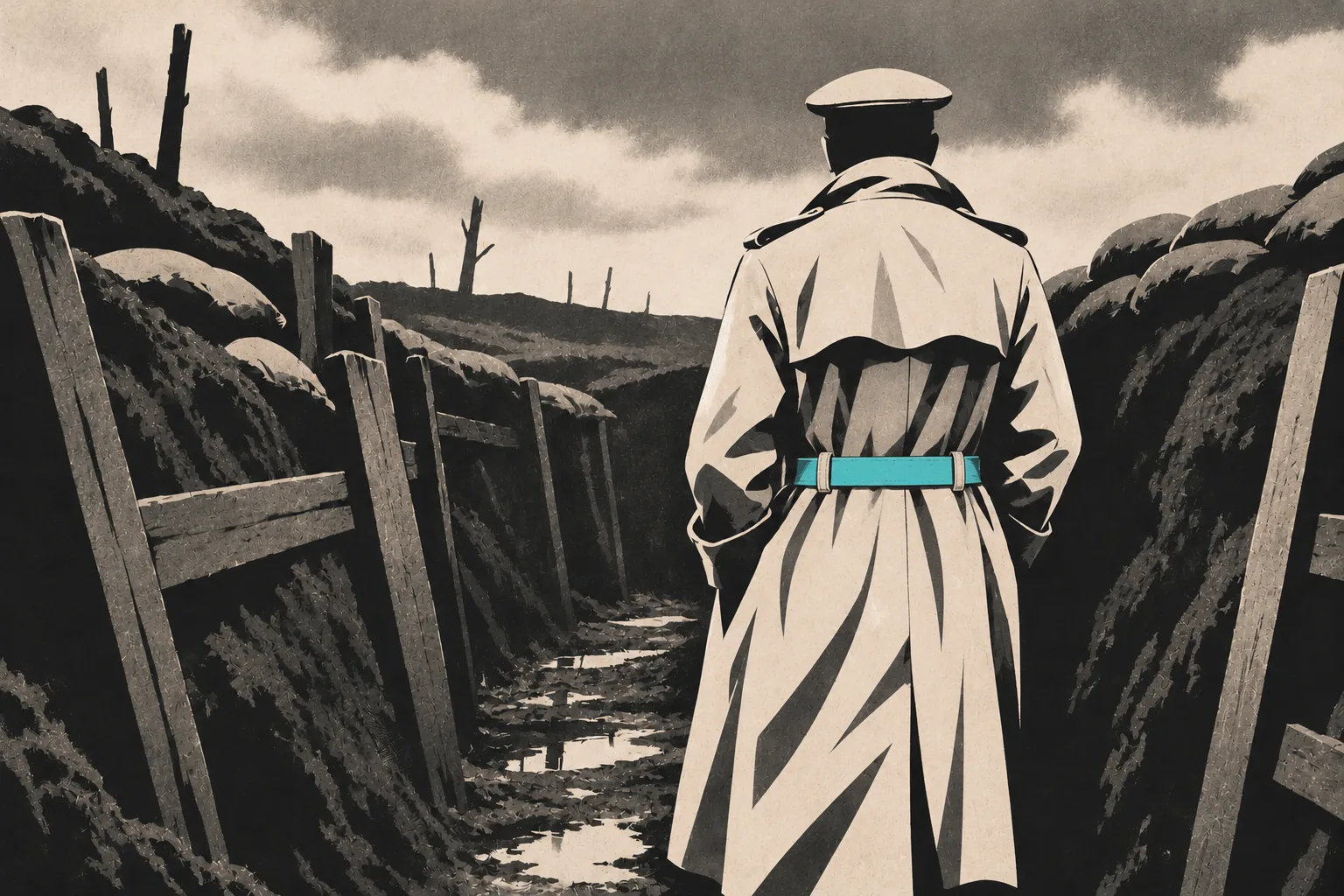
After the war it continued to be worn in civilian life, helped by the recognizability of its details: belt, shoulder straps, storm flaps, the construction of the coat. The search for a practical solution had produced an object whose formal features were strong enough to outlive its original context.
By belonging: dressing means recognizing one another
In some styles the social function matters as much as the aesthetic one. The Zoot Suit, widespread in the United States in the 1940s, was associated above all with young African Americans, Mexican Americans and Filipino Americans: long jackets, accentuated shoulders, wide trousers tapering toward the hem.
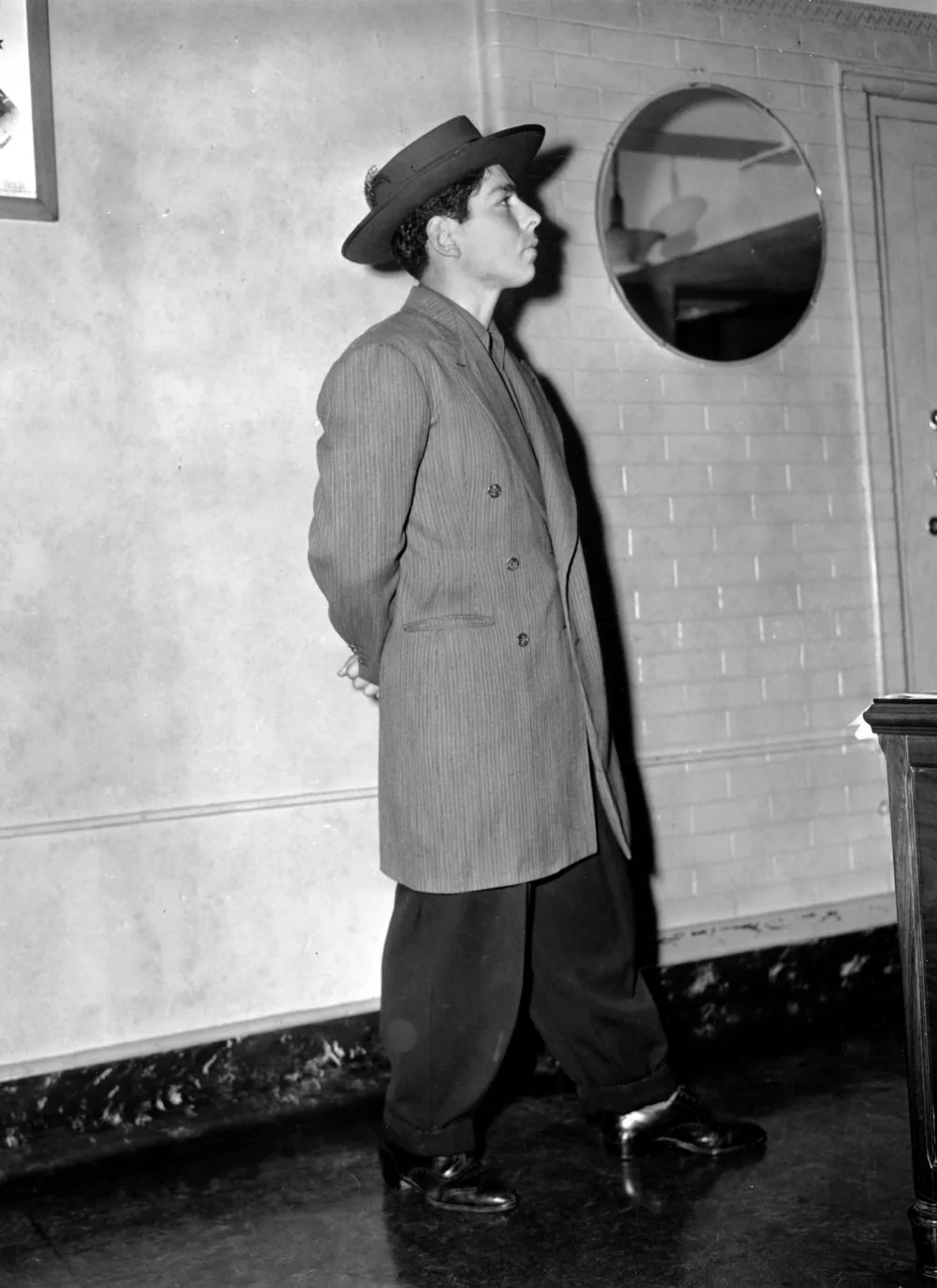
In Los Angeles, in June 1943, the clashes known as the Zoot Suit Riots showed how a dress code could become a sign of social and ethnic identification, to the point of being used as a pretext for discrimination and violence. The suit was not a decorative object: it made visible an identity that part of society refused to accept. Its relationship with jazz and dance is covered on the Music and Fashion page.
The life cycle: from appearance to return
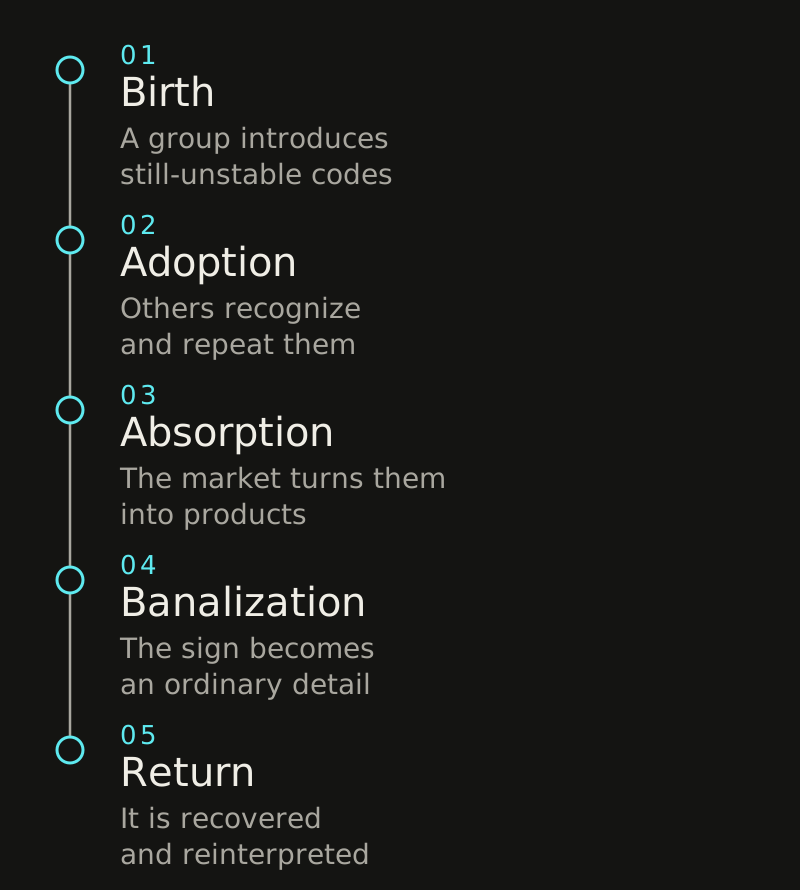
A style does not always follow a regular sequence. Some phenomena disappear early, others transform, others remain available as a repertoire for later generations. Still, five recurring moments can be recognized. They are an interpretive reading, not obligatory steps: there is no universal length of the cycle.
Birth. A group, a designer or a community introduces a set of elements that does not initially belong to the dominant language. The codes are still unstable and change from person to person.
Adoption. Other people recognize those codes and use them. Repetition makes the style legible. Not everyone has to wear the same garments: recurring proportions, materials or details are often enough.
Commercial absorption. The market identifies a demand and translates some elements of the phenomenon into replicable products. Quantities, availability, prices, materials and ways of distribution change.
Banalization. The elements become familiar and lose part of their distinctive power. What once set a group apart becomes an ordinary detail. This does not mean the style is over: it can continue in other forms.
Return. Earlier elements are recovered and reinterpreted, either keeping the original reference or changing its meaning entirely.
Punk lets us observe several of these steps. In the second half of the 1970s it was recognizable by altered clothes, torn surfaces, safety pins, chains, provocative graphics and deliberately dissonant combinations. Westwood and McLaren’s production turned some of these experiments into recognizable, sellable garments. In 1977 Zandra Rhodes presented the Conceptual Chic collection, with safety pins, chains and other references to the Punk aesthetic: the language had already begun to circulate beyond its own environment.
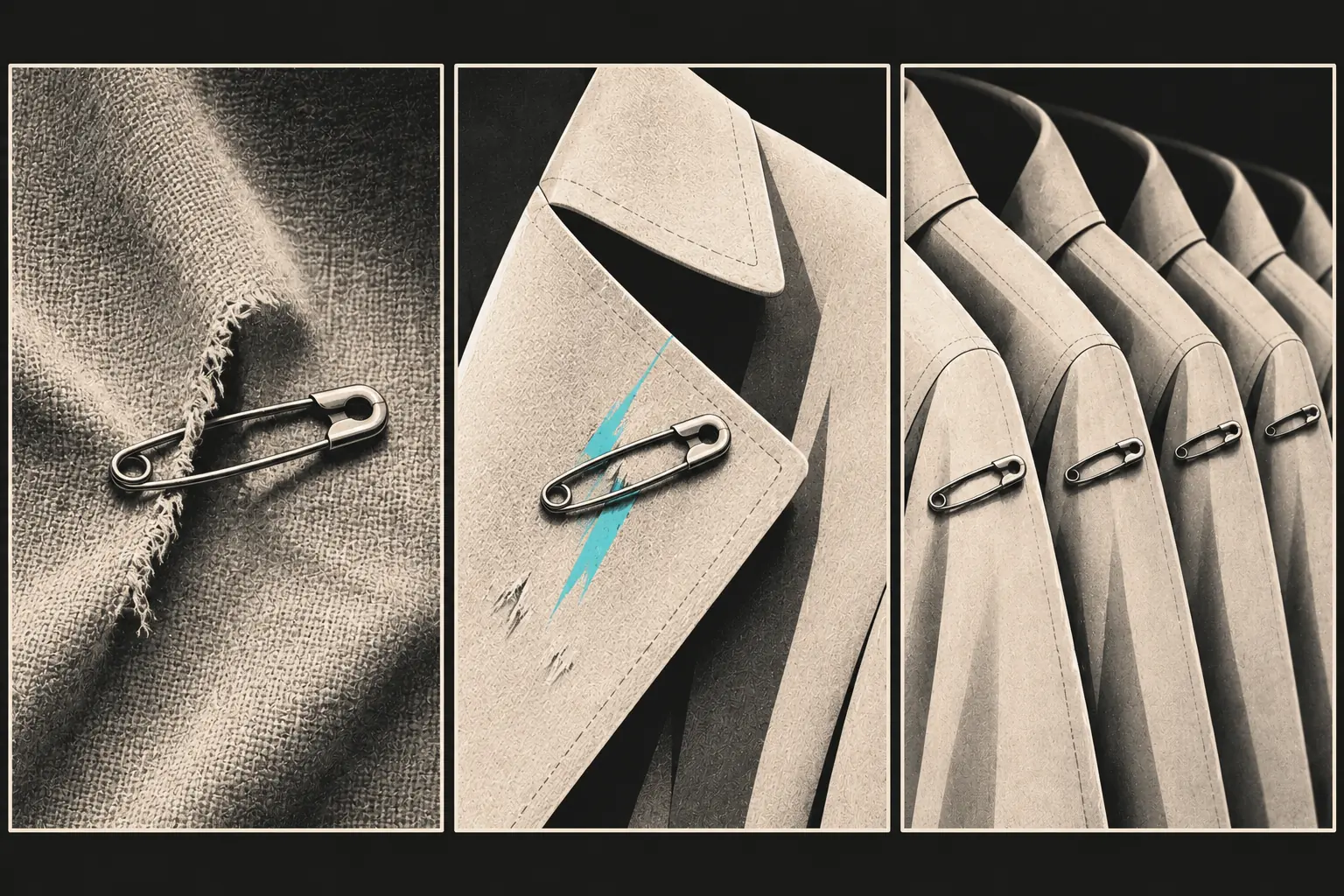
The move to the market did not erase Punk culture, but it changed its availability and legibility. A safety pin could be a practical repair, an aesthetic choice or a gesture of protest; when it becomes a detail repeated in industrial production, its meaning is no longer necessarily the same.
Hip-hop also shows an interesting passage. Born in the Bronx in the 1970s as a musical, choreographic and visual culture developed by young African Americans and Latin Americans, it built its own language of clothing over time. In 1986 Run-DMC released My Adidas, dedicated to the Superstar sneakers, and in the same year the relationship with the manufacturer became a commercial agreement, one of the first known examples in the music industry. A shoe born as a sports product had become a sign of cultural belonging and, later, a vehicle for commercial communication.
The return, finally, does not mean an identical revival of the past. The original Teddy Boys were replaced by other subcultures, but their style saw later revivals, often with proportions even more exaggerated than the original references. A revival is a second interpretation: the past is selected, simplified and rebuilt with the needs of the present.
Those who observe help to build the style
A style can exist without being documented, but it rarely reaches wide circulation without some form of observation and diffusion. Photographers, journalists, magazines and researchers turn local behaviors into images and information that others can access.
Roger Mayne, with his photographs of postwar London, documented the streets of North Kensington and the new youth subcultures. His Teddy Boys and Teddy Girls are not simple images of clothing: they show clothes in their everyday setting, together with people, urban spaces and relationships. Bill Cunningham, a photographer for the New York Times, observed for decades what people wore on the streets of New York. His attention was not limited to celebrities and runway shows: he recorded combinations, proportions and behaviors that would be hard to see by looking only at collections.
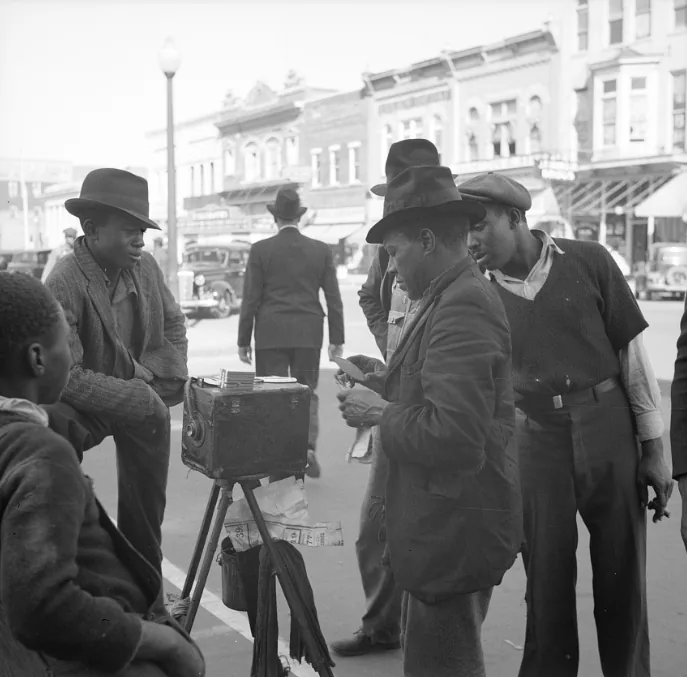
Photography, however, is never completely neutral. Choosing an image, publishing it and repeating it means making some elements more visible than others. The observed phenomenon can change: a local combination becomes an international reference, a marginal detail is singled out as characteristic, a heterogeneous group is represented by a simplified image.
The same is true of trend hunters. They collect signals, compare behaviors, look for recurrences. Their task should not be to declare at once that something will become a trend, but to tell an isolated manifestation from a behavior that repeats in different contexts. Observing a phenomenon means trying to understand it; turning it straight into a commercial forecast means attributing to it a meaning it may not yet have.
Style, identity and belonging
The relationship between clothing and identity has been studied by many sociologists and cultural scholars. Three contributions help to read the cases seen so far.
Georg Simmel, in his 1904 essay Fashion, describes fashion as the coexistence of two drives: imitation and differentiation. We adopt recognizable forms to feel part of a group, but we also seek to stand out; when a code spreads too much, it loses its distinctive power and leaves room for new forms.
Dick Hebdige, in Subculture: The Meaning of Style (1979), studies the meaning of objects and clothes in British youth subcultures. He shows how ordinary elements can be combined and transformed into signs of cultural opposition: clothing communicates not only through its aesthetic value, but through the context in which it is used.
Herbert Blumer, in his 1969 essay Fashion: From Class Differentiation to Collective Selection, shifts the focus to collective selection: fashion also emerges from the interaction of people who observe, evaluate and adopt different possibilities.
These readings help us avoid a superficial reading of style. A military jacket can be worn for its functionality, for its historical value, for its reference to a subculture or simply because its construction is interesting. The object may be identical, but its meaning changes with who wears it, where, and with what it is combined. That is why recognizing a garment is not enough to understand a style: we have to observe the system of relationships in which that garment acquires meaning. Simmel, Blumer and the other scholars are explored further on the Thinking about Fashion page.
From phenomenon to product: the role of those who make
Between the emergence of a style and its commercial spread there is a material phase that is often barely visible. An individual behavior is carried out by modifying an existing garment, recovering a material, combining objects bought in different places. Industrial production, by contrast, requires a technical translation: deciding which elements to keep, which to change and which to make repeatable.
Punk, again, is a good example. In its early phase much of its aesthetic depended on customization: tears, recompositions, pins, applications, hand work. The effect did not come from designing a new model, but from treating an existing garment. When these elements entered commercial production, they had to be translated into controllable processes.
A tear made by hand and a tear designed to be reproduced on a hundred garments may look alike, but they are two different operations. In the first case the result depends on the gesture. In the second we have to define position, size, treatment, resistance and repeatability.
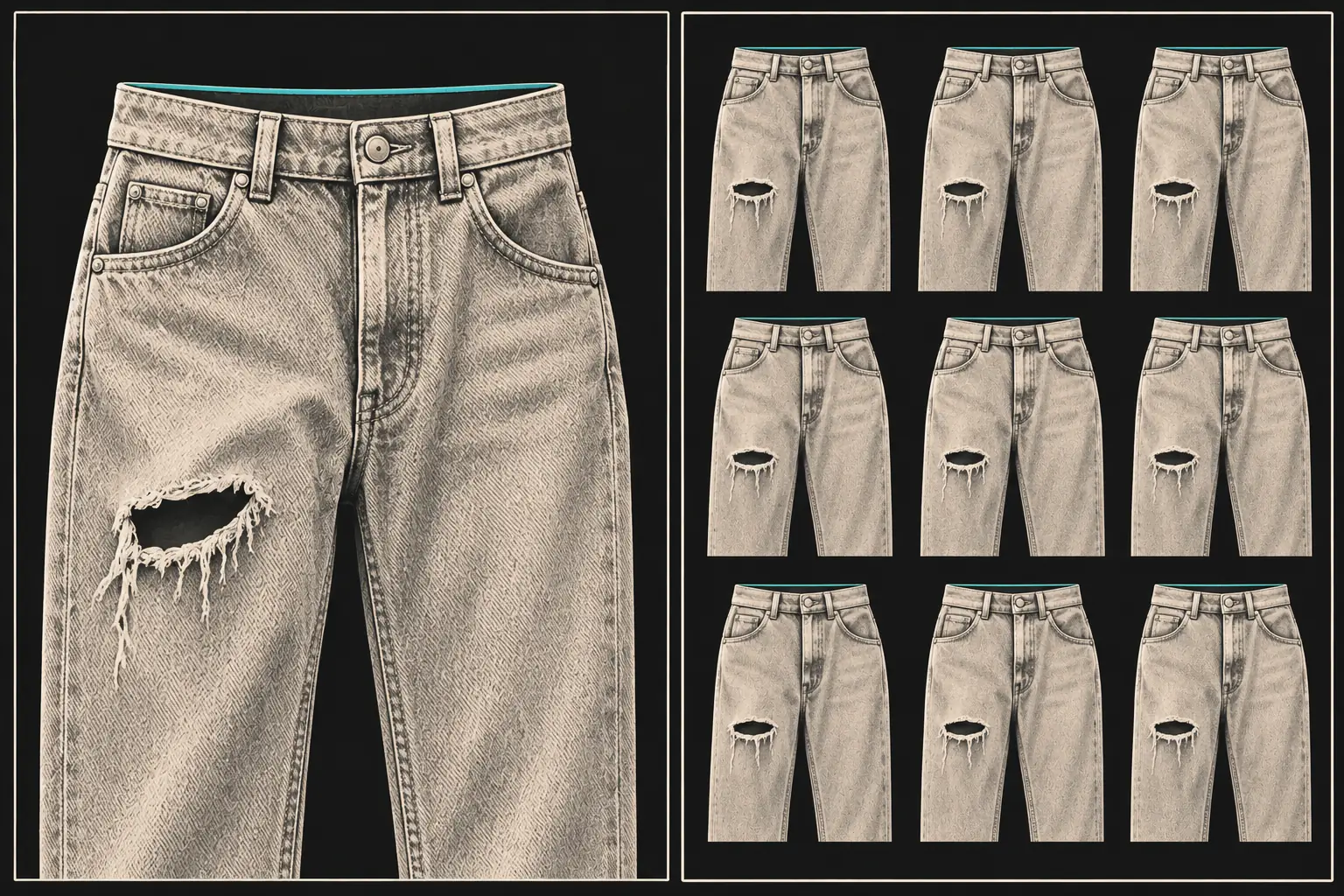
The same goes for material contaminations. A garment that recalls military clothing does not necessarily have to use an original military fabric: it can take up the construction, the proportions, the pocket system or the functional logic, and translate them into different materials.
That is why the work of manufacturers, workshops and product managers is decisive: they check whether an aesthetic feature can become a construction solution, whether a material supports the intended effect and whether the result can be repeated without losing quality. Commercial diffusion is not only communication: it is also a technical transformation of the phenomenon.
How to read a style without copying it
For a designer, studying a style means breaking it down. The first step is to separate what we see from what generated it. An oversized silhouette, for example, can come from an aesthetic choice, a need for movement, a historical reference or a group identity. Reproducing only the volume means keeping the appearance, not necessarily the design principle.
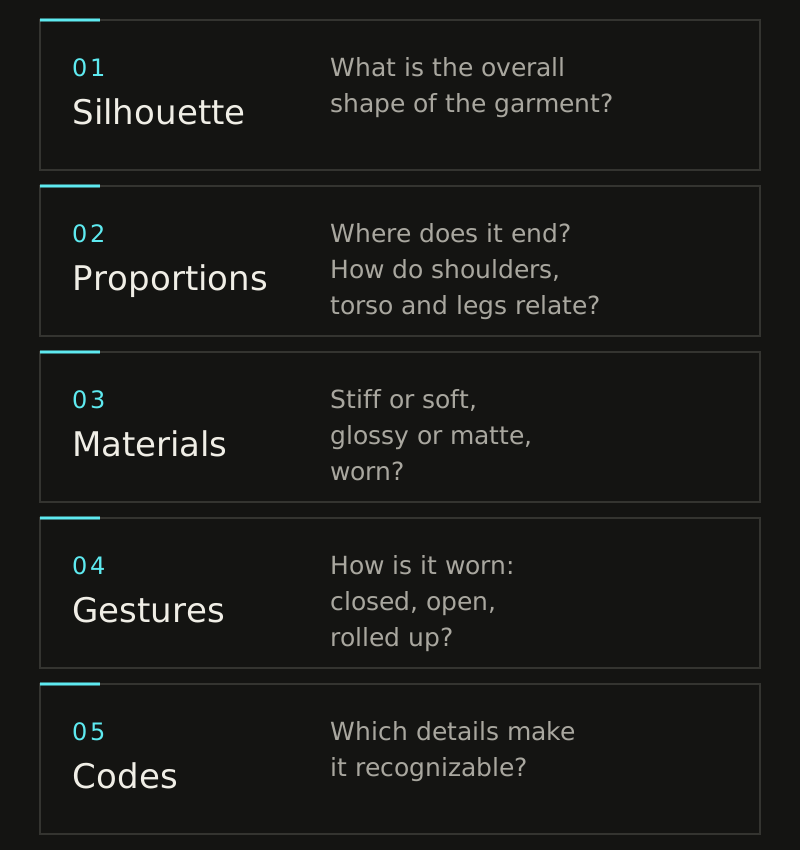
Observation can be organized around five elements.
Silhouette. What is the overall shape? Does the garment take up more space, follow the body or hide it? Which volumes does it emphasize?
Proportions. Where does the garment end? How do shoulders, torso, sleeves and legs relate? Which element alters the traditional balance?
Materials. Is the surface stiff, soft, glossy, matte, worn, compact? Was the material chosen for a function or for its expressive value?
Gestures. How is the garment worn? Closed, open, rolled up, layered, modified? The way it is used can matter as much as its construction.
Codes. Which details make the phenomenon recognizable? Pockets, seams, accessories, graphics, colors, closures or recurring combinations?
Once these elements are identified, we can work on the principle instead of the surface. A Punk reference does not oblige us to use tears and safety pins: it can suggest a reflection on construction, on the visibility of joins, on repair or on the transformation of a finished garment. A military reference does not oblige us to use camouflage and metal buttons: it can suggest a pocket system organized by function, a modular construction, a distribution of volumes that responds to movement.
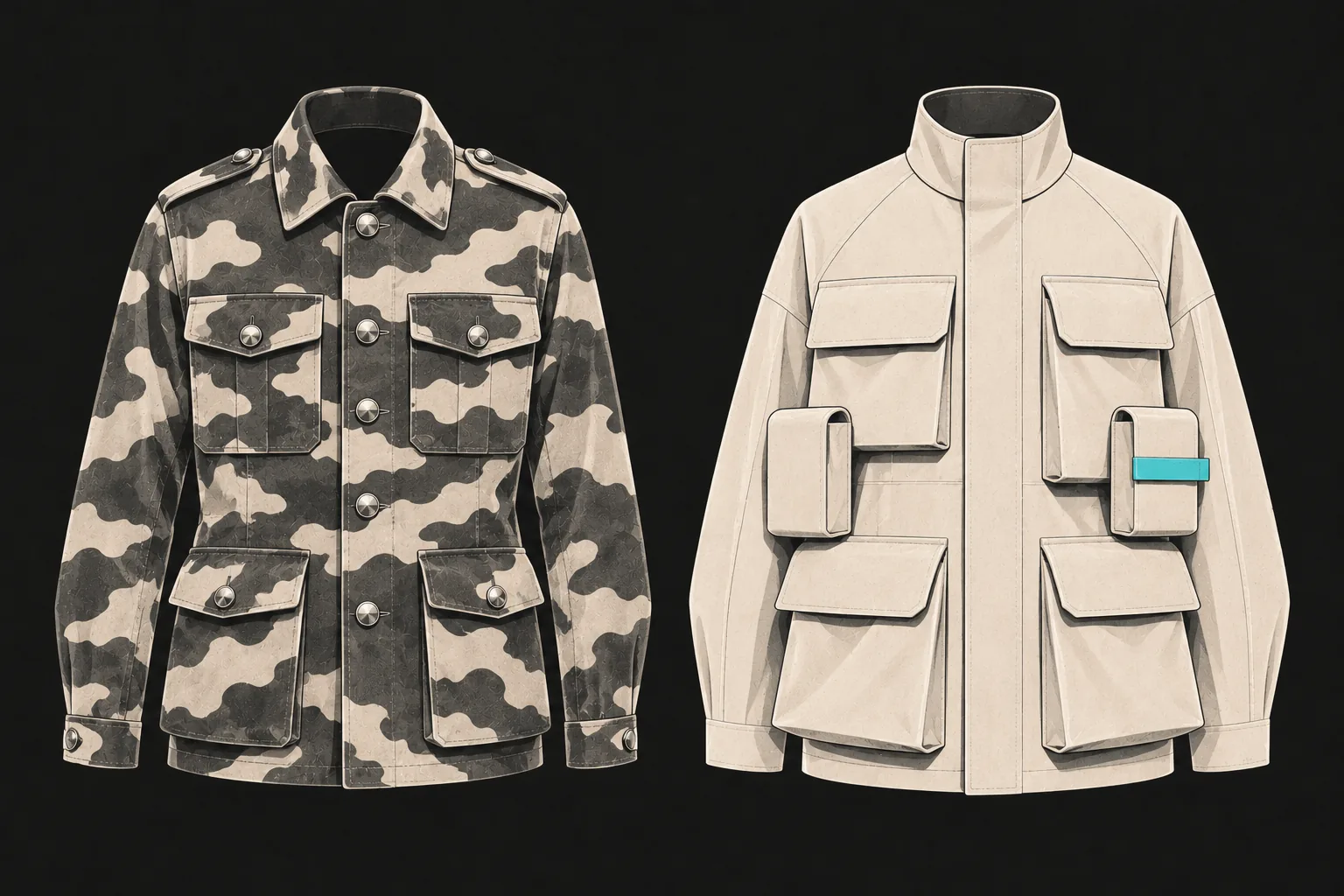
The difference between quotation and design lies here: quotation reproduces a recognizable sign, design interprets the reason why that sign exists.
What it means for those who design today
The phenomenology of styles offers, first of all, a method of observation, even before a repertoire of references. For a designer, a fashion designer or a product manager the first question is not which style to adopt, but which phenomenon deserves to be understood. An emerging behavior can be interesting even when it does not immediately produce a trend: a particular way of dressing, an unusual combination of materials or a repeated modification of a garment can point to a need that is still poorly represented in the offer.
Some practical considerations follow.
Tell the signal from its representation. A photograph can make a phenomenon visible without representing all its complexity. Before turning an image into a design reference, it is worth looking for other testimonies, places and people that confirm the observed behavior.
Identify what stays constant. When a style is adopted by different groups, some elements change and others remain recognizable. Identifying them lets us separate the fundamental code from the superficial manifestations.
Understand function before form. A detail may have been born from necessity and acquired an aesthetic value later. Reconstructing its origin helps decide whether it still makes sense to keep it, change it or remove it.
Separate the reference from the technical solution. A silhouette, a treatment or a material should not be reproduced automatically: the designer has to check how to obtain a coherent result with different construction, materials, processes and fit.
Consider time. A highly visible style is not necessarily a lasting phenomenon. We need to understand whether it answers a stable need, a cultural identity or a momentary phase of media exposure.
Finally, there is a basic question: commercial speed is not the same as cultural understanding. Quickly turning a reference into a product does not mean designing well. Sometimes the most interesting choice is to keep a principle and abandon the details that made it immediately recognizable.
A good project does not need to show that it knows every trend. It needs to show that it has understood why certain forms were born, why they are used and what possibilities they offer today.
Style is a phenomenon to be read before it becomes a product to be designed.